






The Chief Executive Officer of the Ghana Free Zones Authority, Dr Mary Awusi, has fired a strong warning at the Chairman of the Church of Pentecost, Apostle Dr Eric Nyamekye, over his recent comments on illegal mining (galamsey), cautioning that future statements could be treated as political.
Speaking during an interview on Accra FM on Thursday, April 23, 2026, Dr Awusi criticised the Pentecost leader’s remarks, describing them as political and warning that future statements of a similar nature would be treated accordingly.
“He’s a man of God, so we’ll forgive him. But next time, he shouldn’t stoop so low to that level. I am telling him. If he descends to that level to behave like a politician, we will deal with him as a politician. I’ve given him reverence because he’s a man of God and the Chairman of the Church of Pentecost,” she stated.
Her comments come in response to concerns raised by Apostle Nyamekye during the Church of Pentecost’s 48th General Conference, where he highlighted the environmental and operational impact of illegal mining on church activities. In his State of the Church Address, he pointed to the pollution of water bodies as a growing challenge, particularly affecting baptism practices.
“The extensive pollution of water bodies due to illegal mining has hampered traditional water baptism in some mining communities, necessitating a shift to synthetic rubber pools in several districts to carry out the ordinance. These unpredictable environmental conditions, along with the seasonal migration of fish stocks, continue to impact the steady financial growth and stability of affected local assemblies.”
Dr Awusi, however, insisted that while religious leaders play a critical role in society, they must exercise caution when speaking on matters with political implications.
When the programme host described Apostle Nyamekye as an anointed man of God, she responded: “It’s not about anointing. If he were that anointed, he wouldn’t speak in this manner.”
She further challenged what she described as selective commentary on the galamsey issue, arguing that environmental degradation has occurred under different administrations and should not be framed in a partisan way.
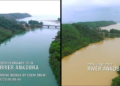
“What he said is a highly political statement. When Nana Addo was in office, many communities in the mining communities had their water looking very thick and brown. Was he not in Ghana? Did he see it or not?” she questioned.


Dr Awusi also maintained that improvements have been recorded under the current administration.
“Today, after John Mahama came to power, due to the measures he has put in place, the rivers are flowing, so you cannot claim that you’ve seen no difference in the state of the water. During Akufo-Addo’s time, the rivers were not flowing at all,” she claimed.
Reiterating her warning, she stressed that continued commentary in the same tone could attract a different response from authorities.
“So, if you’re a reverend minister and you bypass the truth by taking off your pastoral robe and putting on political clothes and a political lens to speak, the next time we’ll treat him as a politician. This time we’ll spare him. We beg of him to focus on his pastoral work,” she said.
The exchange underscores rising tensions in Ghana’s ongoing fight against illegal mining, a longstanding issue that has severely impacted river bodies and forest reserves across the country. While successive governments have rolled out interventions to curb the menace, the situation remains a major national concern.
Increasingly, religious institutions, civil society organisations, and environmental advocates have joined the conversation, calling for stronger enforcement and sustainable solutions. However, the latest remarks highlight the delicate balance between moral advocacy and political sensitivity in Ghana’s public discourse.