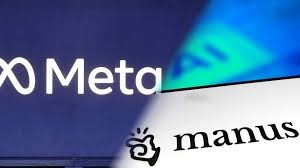







Chinese regulators have blocked a proposed $2 billion acquisition of artificial intelligence start-up Manus by Meta, citing strict foreign investment rules.
The deal, announced in late December, was expected to strengthen Meta’s artificial intelligence capabilities by integrating Manus’ advanced autonomous agent technology across its platforms. However, Beijing’s National Development and Reform Commission has now prohibited the transaction, instructing “the parties involved to withdraw the acquisition transaction,” according to reports released Monday.
Meta has pushed back against the decision, maintaining that it complied with all legal requirements. A company spokesperson told the BBC, “the transaction complied fully with applicable law.” The spokesperson added, “We anticipate an appropriate resolution to the inquiry.”
The setback follows months of regulatory scrutiny by Chinese authorities. Although Manus is currently headquartered in Singapore, the company was originally founded in China, placing it under the jurisdiction of Beijing’s tech regulations.
Manus has drawn attention in the competitive AI sector for its claim of developing a “truly autonomous” agent capable of planning, executing, and completing tasks independently—distinguishing it from conventional chatbots that require continuous user prompts.
Industry analysts had previously described the acquisition as a strategic fit, particularly as Meta chief executive Mark Zuckerberg intensifies efforts to expand the company’s AI footprint. The firm has also been investing heavily in AI, even as it moves to cut thousands of jobs.
Rising Tech Tensions
The decision underscores China’s tightening control over its technology sector and highlights growing geopolitical friction between Washington and Beijing.
China enforces strict regulations governing the sale and export of domestic technology firms to foreign buyers. These rules have previously played a key role in high-profile transactions, including efforts involving ByteDance and the future of TikTok in the United States.
Reports in March also indicated that Manus’ co-founders were temporarily barred from leaving China during the regulatory review process.
Despite the uncertainty surrounding the deal, Meta had earlier indicated that Manus’ team was already working closely within its ecosystem. A spokesperson previously said, “The outstanding team at Manus is now deeply integrated into Meta, running, improving and growing the Manus service and will continue to make it available to the millions of people who enjoy it.”
Analysts warn that any move to unwind the acquisition could prove complex, given the level of operational integration already in place.
The development comes amid broader tensions over artificial intelligence dominance. The White House recently pledged closer collaboration with US AI firms to counter what it described as “industrial-scale campaigns” aimed at stealing technological advancements, alleging that “foreign entities, principally based in China” were replicating American AI models.


China has rejected such claims. A representative from its embassy in Washington criticised what it called “the unjustified suppression of Chinese companies by the US,” adding, “China is not only the world’s factory but is also becoming the world’s innovation lab.”
The standoff signals that competition over AI and advanced technologies is set to remain a defining feature of US–China relations, with global tech companies increasingly caught in the middle.