






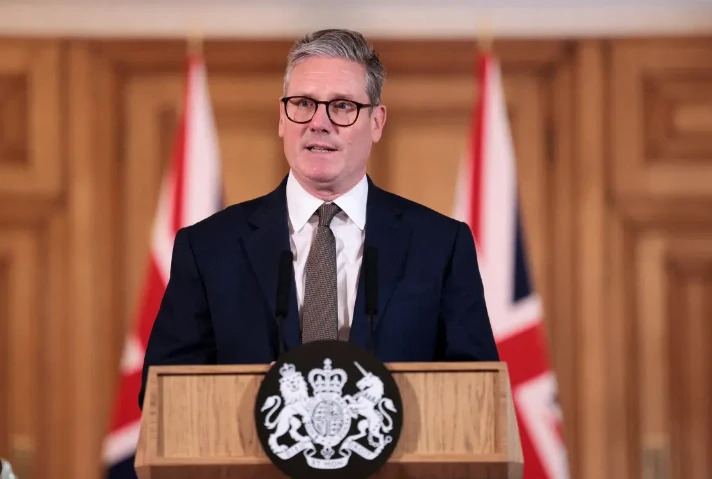
British Prime Minister Keir Starmer has adopted a defiant tone in the face of growing dissent within his party, resisting calls to step down despite mounting pressure from Labour lawmakers and disappointing recent electoral performances.
Addressing his Cabinet on Tuesday after what officials described as a difficult week following local election results, Starmer projected determination and insisted his government would continue focusing on delivery rather than internal disputes. Nearly 80 MPs from the governing Labour Party are reportedly either calling for his resignation or demanding a clear timeline for leadership transition.
In a pointed message to critics, Starmer issued a direct challenge, stating: “take your best shot.”
He reinforced his position by stressing continuity in governance. “The country expects us to get on with governing. That is what I am doing and what we must do as a Cabinet,” he told ministers, emphasizing that internal unrest should not derail government business.
Starmer also noted that the formal process required to trigger a leadership contest within the Labour Party had not yet begun. “That has not been triggered,” he said, referencing the threshold of signatures needed from MPs to initiate a challenge. He added, “I take responsibility for these election results and I take responsibility for delivering the change we promised,” while acknowledging the party’s recent setbacks.
The internal strain became more visible following the resignation of Miatta Fahnbulleh, the Minister for Devolution, Faith and Communities. In her resignation letter, she criticized the government’s direction, stating it had not “acted with the vision, pace and ambition that our mandate for change demands,” and added sharply: “The public does not believe that you can lead this change — and nor do I.” She also urged the Prime Minister to establish a structured leadership transition.


Despite the criticism, several senior cabinet members publicly backed Starmer. Housing Secretary Steve Reed cautioned against further division, warning that “this instability has consequences for people’s lives.” Business Secretary Peter Kyle described the Prime Minister as “steadfast,” while Defence Secretary John Healey stressed that “more instability is not in Britain’s interest.”
The crisis follows disappointing local election results in which Labour lost more than 1,400 council seats. The losses were compounded by a notable surge in support for the right-wing Reform UK led by Nigel Farage, raising concerns within Labour about its prospects ahead of the 2029 general election.