






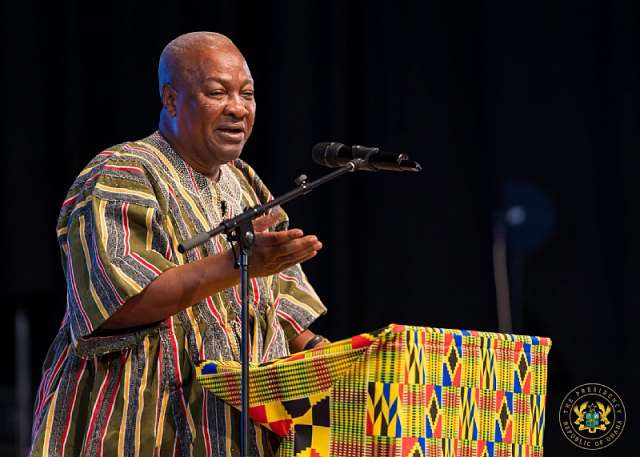
President John Dramani Mahama has cast uncertainty over the immediate future of the controversial Human Sexual Rights and Family Values Bill, stating that despite its passage in Parliament, there are still significant steps to be completed before it can become law.
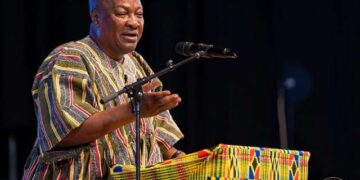
Speaking during a Chatham House interview on Monday, June 1, as part of his visit to the United Kingdom, the President indicated that the legislative process was still ongoing and far from conclusion.
“The Human Sexual Rights and Family Values Bill has been a bill that has probably evoked the most interest in Ghana. It shows how important issues of family values are.
“Parliament has been considering it, and it was supposed to have been passed last week. There have been a few issues raised”.
“One, that there wasn’t a quorum when it was passed. That’s an issue that has come up. And then, two, there were some procedural lapses in terms of its passage”.
“I just got some communication that the Speaker was reading a statement to address the issue of the lapses in the passage of the Bill. And so, like I said, when I was the opposition leader, the President has a number of options in this matter. It must come for assent”.
“And so, once the President gets it, you go through it, because you are not part of the discussion in Parliament. And so, the legal representative, the legal counsel in the Presidency and the Attorney General would sit on it, because it was a private member’s motion. This was not a government bill”.
“And so, we’ll look at it and make sure that everything is in order before the President is advised to assent.
“The President has another option if there are some things that he thinks are a problem. He can refer it to the Council of State for advice”.
“The Council of State is an advisory body to the President. And so, they’ll take a look at it and then they’ll advise the President. And if there are issues — substantial issues that are raised — the President would return the Bill to Parliament indicating exactly what the issues are”.
“And so, there’s still quite a while to go before that Bill becomes law,” He Said.
His comments come just days after Parliament passed the Bill on Friday, May 29, 2026, following a third reading presided over by First Deputy Speaker Bernard Ahiafor, who formally declared it approved.
The passage followed amendments introduced after the second reading on Thursday, May 28. The revised version includes exemptions for professionals such as lawyers, journalists, medical practitioners, and counsellors, who may engage with individuals identifying as LGBTQ+ in the course of their work without being deemed to have promoted related activities.


Majority Leader Mahama Ayariga defended the amendments, arguing that they were intended to narrow the scope of the law and protect legitimate professional and academic work.
However, the changes have triggered sharp resistance from parts of the Minority caucus.
Nana Asafo-Adjei Ayeh of Bosome-Freho argued that the amendments significantly alter the intent of the legislation, stating that “The new bill we wanted Akufo-Addo to pass is now exempting all these people under this clause, including NGOs, academic publications for science and medical opinions, and the reporting of news and current affairs by media houses. The point we are making here is that this is watering down the bill that you wanted Akufo-Addo to sign, for which people had reasons. Today, it is clear that you are exempting all these people under this Bill, which is not the same Bill you asked Akufo-Addo to sign,”
Similarly, Assin South MP John Ntim Fordjour also raised strong objections, warning of firm resistance to the proposed changes:
“These are the people sponsoring, supporting, and making these activities rather attractive behind the scenes and even sometimes overtly. And so I find it highly problematic. Any attempt by this House to push any of these exceptions in, we will resist it. And if the House will use their majority numbers to push it through, I, as a sponsor, will advise myself accordingly,”
The Bill, which was originally passed under former President Nana Akufo-Addo, continues to generate heated political debate, with divisions deepening between the Majority and Minority over its final form and constitutional journey.
With the President signaling further legal review, the future of the anti-LGBTQI Bill remains uncertain as political tensions deepen and scrutiny over its passage intensifies.