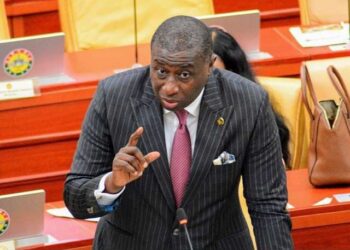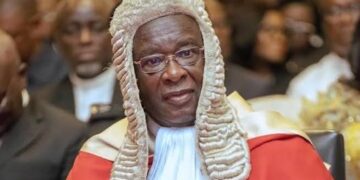







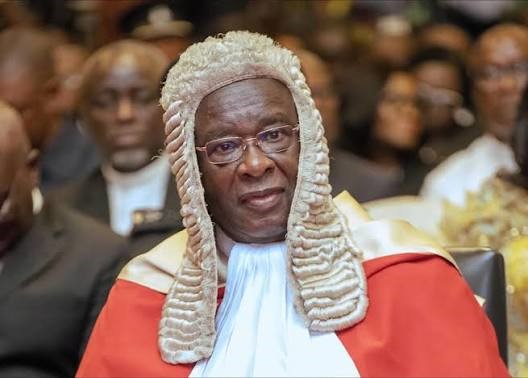
Chief Justice Paul Baffoe-Bonnie has clarified that Ghana’s legal vacation does not automatically prevent judges from hearing cases, rejecting claims that lawyers can decline to appear simply because proceedings have been scheduled during the period.
According to the Chief Justice, where a judge is available and ready to hear a case, counsel cannot unilaterally stop proceedings by citing personal plans or arrangements made for the vacation.
He made the remarks at the 2nd Quadrennial Delegates Congress of the Senior Staff Association of the Judicial Service of Ghana in Sunyani in the Bono Region.
“You cannot say that there is legal vacation, so a judge who is actually sitting and ready to do your case cannot do it. No, that’s not it,” he said.


Justice Baffoe-Bonnie explained that lawyers may only take time away from their professional duties where their clients have agreed to their absence.
He took particular exception to the idea that counsel could notify the Chief Justice that a case should not proceed because the lawyer had already made personal arrangements.
“To write to the Chief Justice to say that the cases should not be adjourned to the vacation, so I am not coming, I have already made arrangements outside, so I am not coming.
“You are a lawyer, you have your clients. If your clients decide to give you leave, well, go on leave, but you cannot say that there is a legal vacation and the judge who is actually sitting cannot do your case. No, that is not it,” he stated.
The Chief Justice also stressed that the decision to adjourn a case is a judicial function exercised by the judge handling the matter and is not an administrative decision for the Chief Justice.
“No, adjournments are not at the instance of the Chief Justice. Adjournment is a judicial act. This is something that is so basic,” he said.
His comments come amid a disagreement between the judiciary and sections of the legal profession over the extent to which cases should be heard during the legal vacation.
The Ghana Bar Association (GBA), in a letter dated August 10, appealed to the Chief Justice over notices requiring lawyers to appear before judges handling part-heard criminal cases during the vacation.
The Association said it had received concerns from Zoe, Akyea & Co, Dame & Partners, and Sam Okudzeto & Associates regarding the notices.
The GBA argued that lawyers who had notified the court of their unavailability during the vacation should not be compelled to attend proceedings.
It cited Order 79, Rule 4 of the High Court (Civil Procedure) Rules, 2004, C.I. 47, which provides for three legal vacations each year. The second and longest vacation runs from August 1 to September 30.
According to the Association, the vacation is intended to give judges, lawyers and judicial staff a break following the second term of the legal year.
While acknowledging that Vacation Courts and Virtual Courts may continue to deal with urgent matters, including interlocutory applications, the GBA maintained that trials are generally not conducted during the period.
The Association further argued that the availability of counsel should be considered when determining whether a matter can proceed.
“Once Counsel in a matter indicates their unavailability to attend Court during the vacation, even though the Court may have listed their case, it cannot proceed with the case in any way,” the GBA stated.
It also maintained that parties should not be forced to represent themselves in civil or criminal proceedings merely because their lawyers are unavailable during the vacation.
The dispute has consequently raised questions about the purpose of the legal vacation and the extent to which proceedings can continue during the period.
Deputy Attorney-General and Minister for Justice, Dr Justice Srem-Sai, has also maintained that the authority to determine whether a case should proceed rests with the court and not with counsel.
For now, the issue continues to attract attention within legal circles, with questions persisting over the conduct of proceedings during the vacation period, particularly in cases where counsel has indicated that they are unavailable to attend.