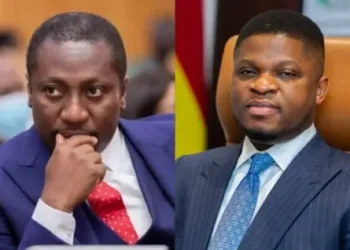








Political figure and legal practitioner Gabby Asare Otchere-Darko has come to the defence of Minority Leader Alexander Afenyo-Markin following public criticism over comments he made about a Circuit Court judge presiding over the case involving NPP Bono Regional Chairman Kwame Baffoe.
The controversy stems from remarks made by Afenyo-Markin after Abronye DC was remanded over allegations of offensive conduct likely to disturb public peace and the publication of false statements against a judge.
The Minority Leader had openly questioned the conduct of the presiding judge and insisted he would continue to disregard him over what he described as the wrongful application of the law — comments that have since sparked public debate and criticism from sections of the public.


Reacting to the issue in a Facebook post on Wednesday, May 20, Otchere-Darko argued that Afenyo-Markin’s comments should be viewed within the broader context of democratic accountability, civil liberties and freedom of expression rather than partisan politics.
According to him, the matter should not be reduced to a political confrontation between the New Patriotic Party (NPP) and the National Democratic Congress (NDC).
“Protecting human rights and guarding the dignity of our legal system requires men and women of courage, conviction, and patriotic verve. That is why I doff my hat to Alexander Afenyo-Markin for taking on the judge who displayed such troubling zeal in endorsing the imprisonment of free speech,” he wrote.
Otchere-Darko further warned that issues surrounding freedom of expression could eventually affect ordinary citizens beyond the political class.
“Today, it may be a political activist. Tomorrow it could be the journalist, the radio commentator, the student, the taxi driver, or the ordinary young Ghanaian with a smartphone and an opinion,” he added.
He also stressed the need for the law to be enforced without undermining constitutional rights and due process.
“Let the law deal firmly with those who fall foul of it. But let it never do so by compromising the protection of fundamental human rights, due process, and the freedoms that hold our democracy together. Justice must be done and seen to be manifestly done,” he stated.
The development has intensified ongoing public discussions surrounding judicial independence, political accountability and free speech following the remand of Abronye DC.