






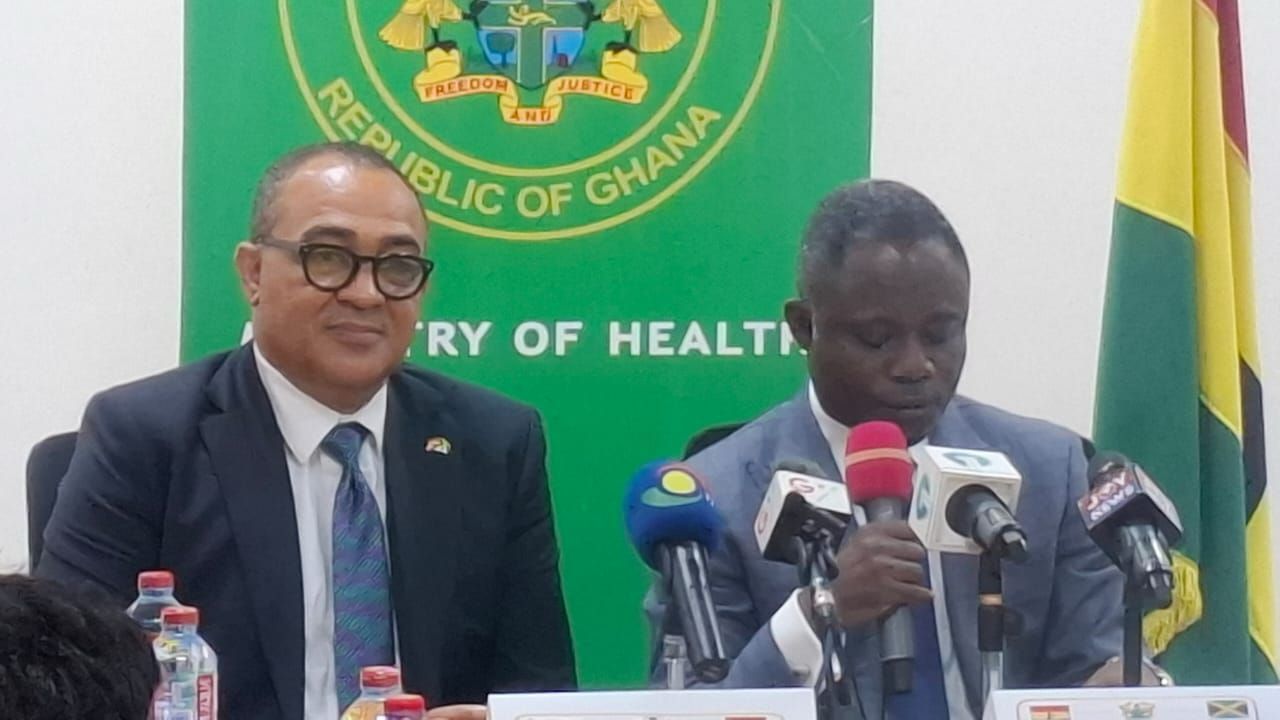
Ghana and Jamaica have formalised a bilateral health workforce agreement that will enable the deployment of Ghanaian health professionals to the Caribbean nation, with the first batch expected to leave by the end of June, 2026.
The arrangement is expected to open new employment pathways for Ghana’s large pool of trained but unemployed health workers, estimated at about 74,000, including nurses, midwives and allied health professionals. Many of them have remained without formal placement due to limited government recruitment and fiscal constraints.
The agreement was reached during high-level bilateral discussions in Accra between Ghana’s Health Minister, Kwabena Mintah Akandoh and Jamaica’s Health and Wellness Minister, Christopher Tufton.
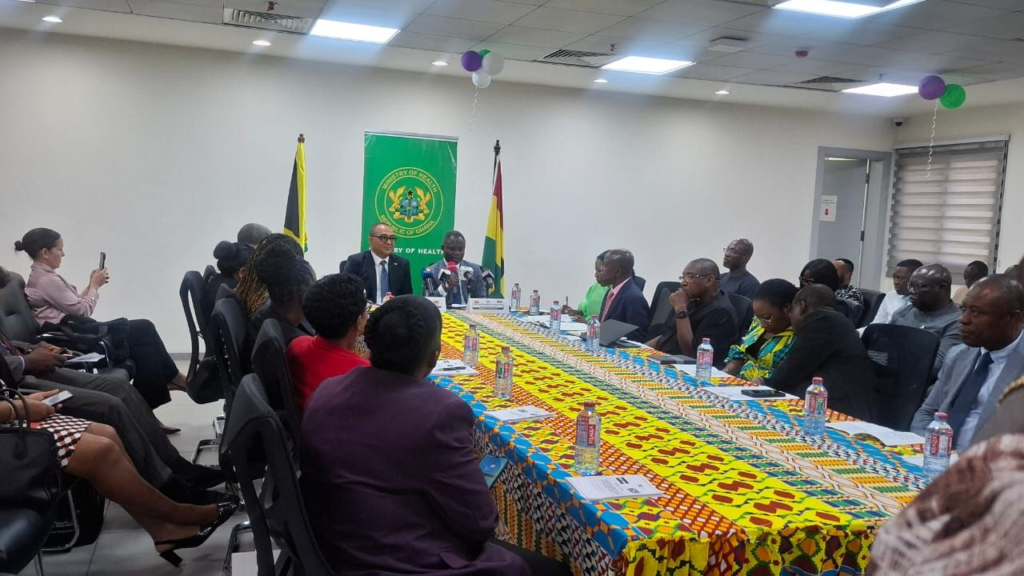
According to Ghana’s Health Minister, the agreement has cleared all necessary technical, administrative, legal and diplomatic processes, paving the way for implementation.
Authorities from both countries are currently working on deployment timelines, documentation procedures, professional licensing, welfare arrangements and institutional coordination to ensure a smooth rollout of the programme.
The Minister described the pact as a significant milestone in Ghana–Jamaica relations, noting that it will promote ethical recruitment while creating employment opportunities and strengthening health systems in both countries.
‘‘The arrangement would also support skills exchange, knowledge transfer and broader collaboration aimed at strengthening health systems in both countries.’’
He further emphasised Ghana’s commitment to international ethical recruitment standards that safeguard the interests of both sending and receiving countries.
‘‘Discussions on implementation have advanced significantly and the first batch of Ghanaian health professionals is expected to depart for Jamaica in June this year’’. He said
On his part, Jamaica’s Health Minister, Christopher Tufton, said the agreement goes beyond labour mobility, framing it as part of a broader effort to address global inequalities in healthcare access.


During the talks, he stressed the importance of international collaboration in improving health outcomes, arguing that unequal access to healthcare remains a persistent global challenge.
‘‘The realities of our current world is that the inequalities of access to health care is a real challenge, and indeed it appears to be getting worse, not better, and it defies the principle of optimizing the best care if collaboration and partnership takes place, and too often the rhetoric around collaboration does not match the actions on the ground to ensure that there’s equitable distribution, access, and availability of health care for mankind, for the world, too many places have more than enough, and too many places have none at all.’’
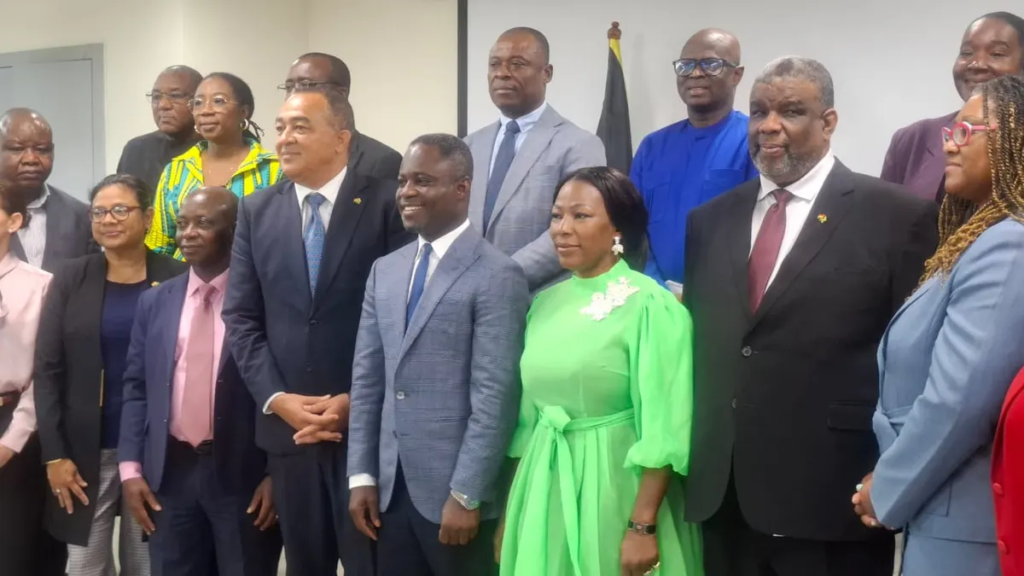
As part of the visit, the Jamaican delegation is expected to tour selected health facilities and regulatory institutions in the Greater Accra and Eastern regions to better understand Ghana’s healthcare system and explore further areas of cooperation.
Beyond workforce deployment, both countries are also in discussions on expanded collaboration in specialist medical training, nursing education, public health, pharmaceutical development, plant medicine research, digital health systems, emergency preparedness, health tourism and scientific research.