






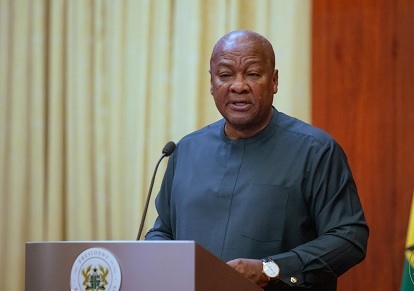
A nationwide poll conducted by the Institute of Economic Affairs has found that most Ghanaians continue to support President John Dramani Mahama, even as approval ratings show a notable decline compared to previous months.
The survey, conducted in May 2026 and covering over 1,000 respondents across all sixteen regions, indicates that the President currently enjoys a 58.9% job approval rating, with 28.4% disapproving and 12.8% expressing no opinion. While approval remains ahead of disapproval by a wide margin, the figures mark a decline from 68% approval recorded in December 2025, suggesting a gradual cooling of public enthusiasm.
Economic Gains Driving Support
The poll comes at a time when several macroeconomic indicators have shown marked improvement since Mahama assumed office in January 2025. According to the IEA, inflation has fallen sharply from 23.5% to about 3.4%, while the cedi has appreciated by 26% against major currencies.
In addition, the Bank of Ghana has reduced its policy rate from 27% to 14%, with commercial lending rates also easing from roughly 32% to 20%. Ghana’s debt-to-GDP ratio has declined from 61.8% at the end of 2024 to 45.3% by the end of 2025, developments that have contributed to improved investor confidence and credit rating upgrades by major agencies.
Despite these gains, the poll suggests that economic improvements are not fully translating into public satisfaction at the household level.
Why Ghanaians Approve — and Disapprove
Among those who approve of the President’s performance, 73.5% cite the economy, pointing to stabilisation efforts and macroeconomic recovery. Another 16.0% reference road infrastructure, while smaller proportions mention energy delivery and other factors.
However, among those who disapprove, the economy also features prominently, with 30.9% citing economic concerns. Analysts suggest this may reflect a disconnect between macroeconomic stability and everyday living conditions, particularly in relation to jobs, wages, and the cost of living.
Energy and electricity supply is another major concern, cited by 29.9% of disapprovers, a sentiment likely influenced by recent power supply disruptions in May 2026 that affected households and businesses across the country. Corruption is cited by 19.1%, indicating continued public demand for stronger accountability measures.
A Support Base Holding, But Plateauing in Support
Despite the decline in approval, the overall data shows that public sentiment toward Mahama remains broadly positive. The 30-point gap between approval and disapproval suggests that his administration still retains a strong support base.
However, the downward trend signals rising public expectations that economic improvements must increasingly translate into visible improvements in living standards.
How Ghanaians View Mahama’s Performance
The IEA poll presents a nuanced picture of public sentiment under the Mahama administration. While respondents acknowledge significant macroeconomic gains, these improvements are yet to fully translate into everyday relief for many households.


Overall support for the President remains solid, but the findings point to rising public expectations for more immediate improvements in the cost of living, job creation, electricity supply stability, and stronger accountability in governance.