






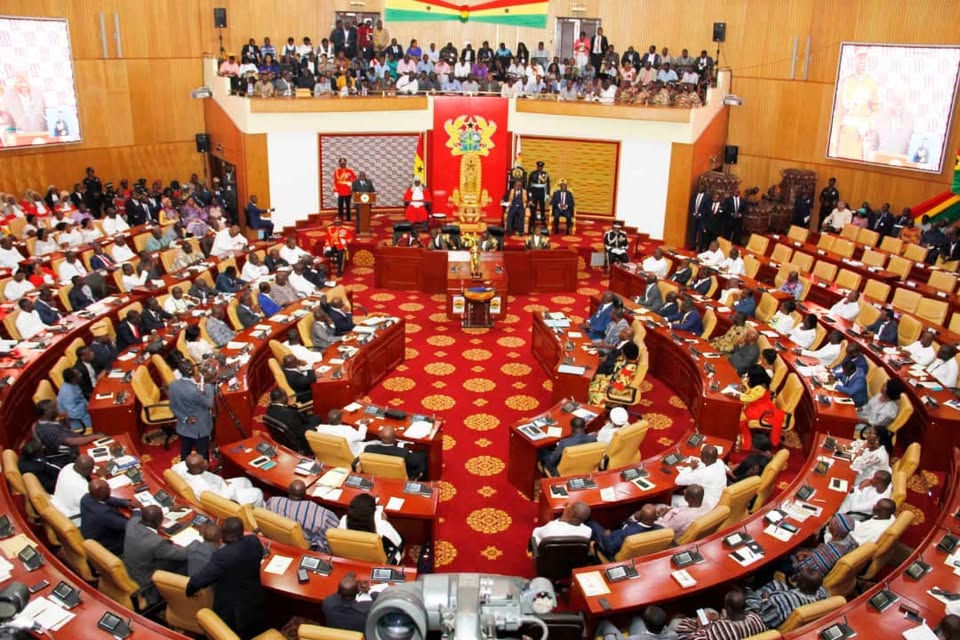
Parliament has approved the Community Service Bill, 2026, paving the way for community service to be introduced as an alternative punishment for persons convicted of certain specified offences instead of serving custodial prison sentences.
The newly passed legislation establishes a National Community Service Secretariat to oversee the implementation and administration of the programme, marking a significant step in Ghana’s efforts to reform its criminal justice system.
The law is expected to provide judges with broader sentencing options while helping to reduce the growing pressure on the country’s correctional facilities, which have long struggled with overcrowding.
The Bill was laid before Parliament by the Minister for the Interior, Hon. Mohammed-Mubarak Muntaka, on March 4, 2026, in accordance with Article 106(1) of the 1992 Constitution. It was subsequently referred to the Parliamentary Committee on Defence and Interior for scrutiny before being returned to the House with recommendations for approval.
Presenting its findings, the committee observed that Ghana’s justice system has historically depended heavily on imprisonment as the principal form of punishment for convicted offenders. It noted that the approach has contributed significantly to congestion in prisons, placing enormous financial and operational pressure on the Ghana Prisons Service through increased spending on inmate welfare, healthcare, feeding and infrastructure.
According to the committee, the Community Service Act forms part of a broader government strategy to strengthen criminal justice reforms by promoting non-custodial sentencing for minor and specified offences.
The legislation is intended to encourage the rehabilitation of offenders, lower rates of repeat offending and support the successful reintegration of convicted persons into their communities while maintaining public safety.
The committee further disclosed that Ghana’s efforts to introduce a structured non-custodial sentencing regime date back to 2014, when the Ministry of the Interior, with support from UNICEF, began developing a national policy to guide the implementation of alternative sentencing measures.


The new law also operationalises existing non-custodial sentencing provisions contained in the Criminal and Other Offences (Procedure) Act, 1960 (Act 30), as well as the Interpretation Act, 2009 (Act 792).
Lawmakers believe the passage of the legislation will modernise Ghana’s sentencing regime, enhance the efficiency of the country’s correctional system and provide courts with practical alternatives that balance accountability with rehabilitation.