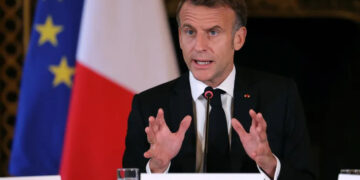







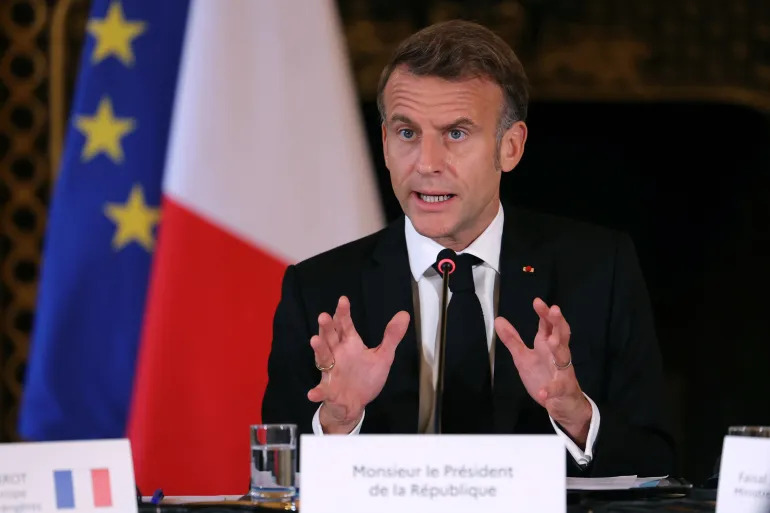
French President Emmanuel Macron has called for a broader understanding of reparations for slavery, arguing that reparative justice should extend beyond financial compensation, stressing that justice for historical wrongs must also encompass truth-telling, education, memorialisation and restitution.
Speaking at the High-Level Consultative Conference on “Next Steps” under the United Nations Resolution on Enslaved Africans in Accra on Thursday, June 18, 2026, Macron said addressing the legacy of slavery requires a comprehensive approach that acknowledges historical truths and preserves the memory of those affected.
According to the French leader, reparations should not be narrowly interpreted as monetary payments but rather as a process aimed at restoring dignity, promoting understanding and confronting historical injustices.
“Reparations, because this is also what it comes down to when we speak of justice, can take different forms as I mentioned several days ago and as John Dramani Mahama has underlined on several occasions,” he said.
Macron stressed that the history of slavery cannot be measured solely in financial terms.
“History cannot be reduced to a simple accounting ledger. Making reparations is about placing this importance of scientific and historical truth; building monuments, teaching, researching. It means returning the works of art that were stolen during those periods,” he stated.


The French President noted that reparative efforts can also involve resolving longstanding historical grievances. He pointed to ongoing discussions involving Haiti as an example of how nations can work toward addressing the consequences of historical injustices.
“Reparations also involves the ability to work out situations as we are currently doing with Haiti. It can be approached from multiple perspectives, but in no case should it be seen as an endpoint, a cheque written to bring the story to a close,” Macron said.
He emphasised that the impact of slavery continues to resonate across generations and must remain part of global conversations on justice and reconciliation.
“The history will live on and we must continue to bear its names, memories, faces and to make amends, make progress and discuss the future,” he added.
Macron further reaffirmed France’s support for international efforts aimed at advancing historical recognition and reparative justice.
“I would like to reiterate my commitment to stand with you. You can count on France,” he said.
The conference brought together world leaders, policymakers and stakeholders to discuss practical steps toward implementing the United Nations resolution on enslaved Africans and advancing the global conversation on reparatory justice.