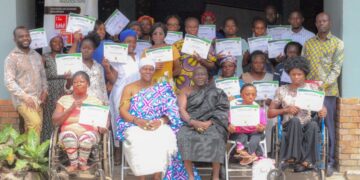







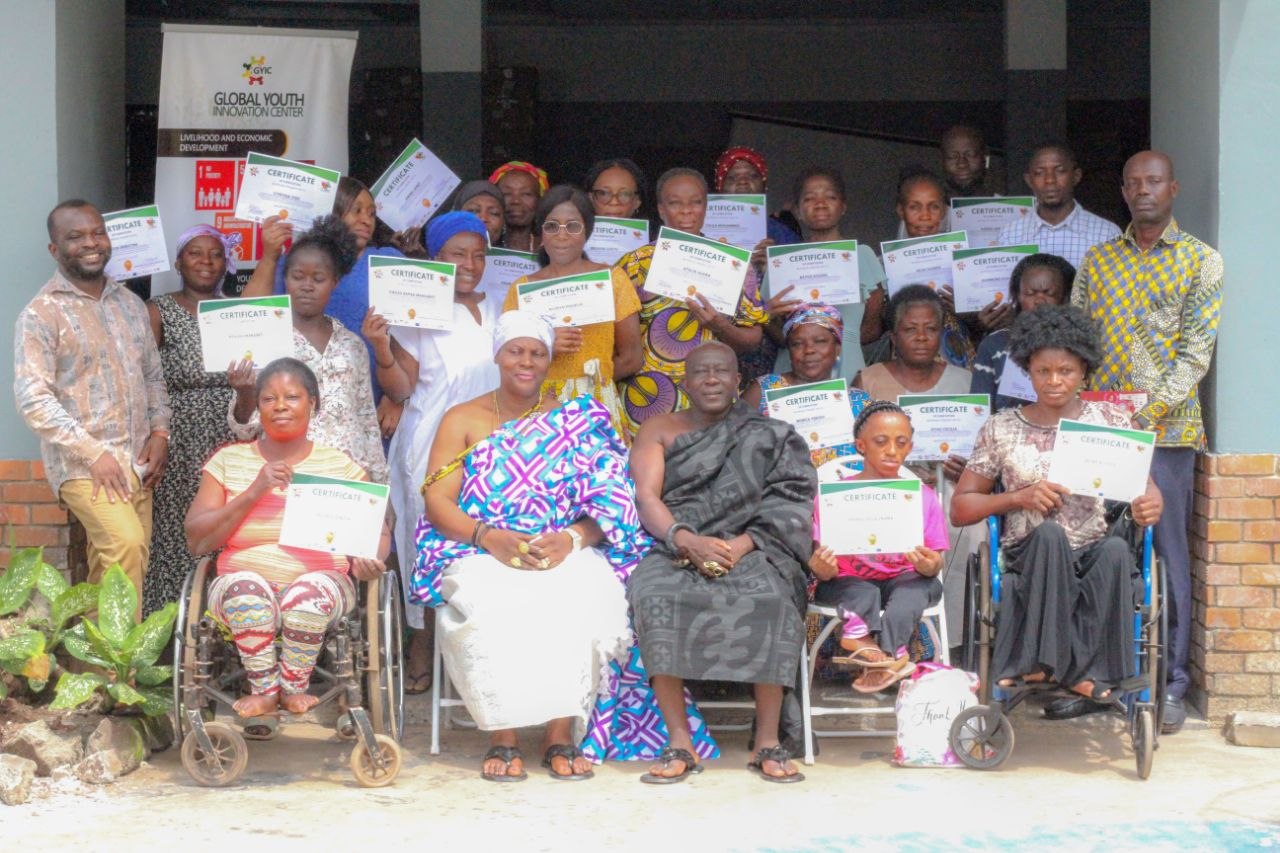
Fifty Persons with Disabilities (PWDs) and migrant returnees in the Sunyani Municipality have graduated from a four month vocational and entrepreneurship training programme aimed at promoting economic inclusion and sustainable livelihoods.
The graduates who completed the Skills4Inclusion Project implemented by the Global Youth Innovation Center (GYIC) are now equipped with practical vocational skills and business knowledge to establish and manage their own enterprises marking a significant step toward financial independence and community development.
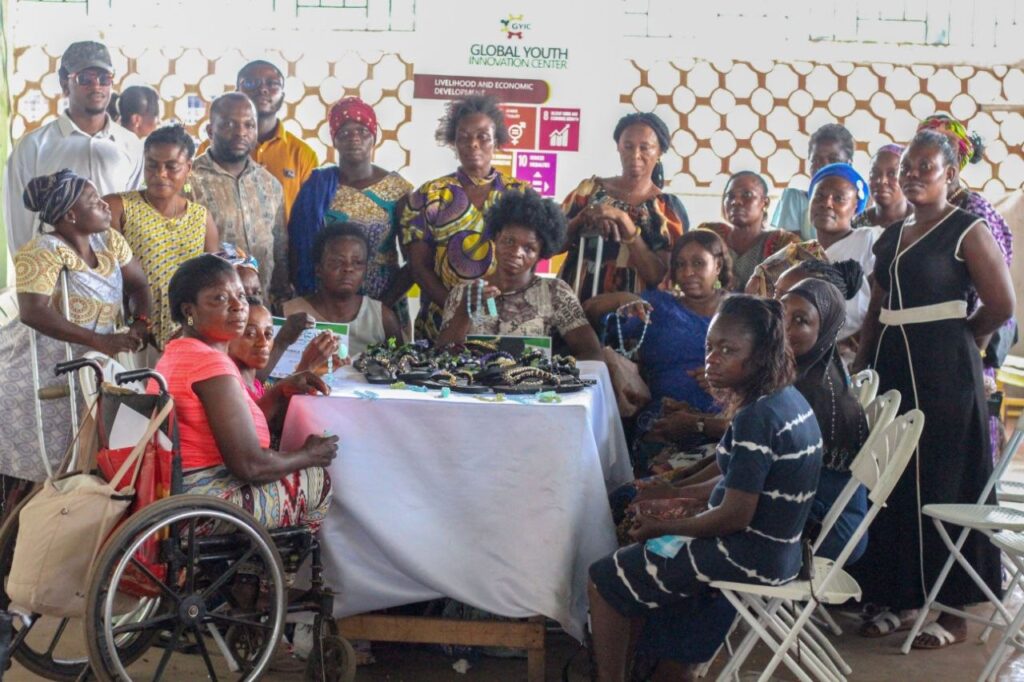
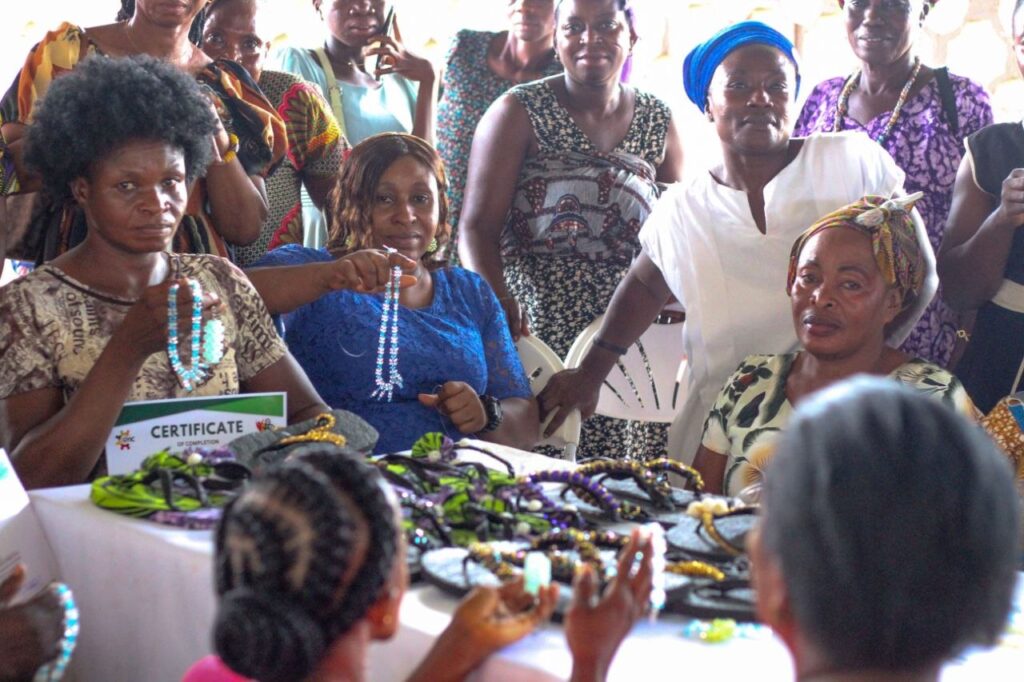
The programme combined certified vocational training with entrepreneurship development, financial literacy, digital marketing, customer relations and business mentoring. Participants received training in pastries and bakery production, soap and detergent manufacturing, cosmetology and bead making, enabling them to transform their newly acquired skills into viable businesses.
For many of the graduates the ceremony represented more than the completion of a training programme. It symbolised a fresh start after years of unemployment, economic hardship, social exclusion and limited access to livelihood opportunities.
In Ghana, Persons with Disabilities often encounter barriers to employment, skills development and financial inclusion while many migrant returnees face challenges rebuilding their lives due to limited resources, disrupted livelihoods and social stigma. The Skills4Inclusion Project was designed to address these challenges by providing practical, market oriented skills and enterprise development support.


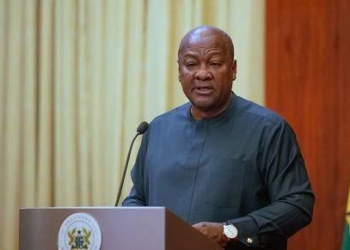
Speaking at the graduation ceremony, Executive Director of the Global Youth Innovation Center, Eric Anorrey, said the initiative demonstrates that inclusive development creates lasting economic opportunities.
“The true measure of development is not how many people we train but how many lives are transformed through sustainable opportunities,” he said.
Mr. Anorrey noted that the graduates should no longer be viewed as beneficiaries of social assistance but as entrepreneurs, future employers, taxpayers and contributors to local economic growth.
He added that disability or migration experiences should never determine an individual’s economic future stressing that every person deserves the opportunity to participate meaningfully in national development.
Also addressing the gathering, Mr. Charles Baah, Bono Regional Director of the Labour Department, described the project as a practical demonstration of how inclusive skills development can unlock untapped talent and strengthen Ghana’s labour force.
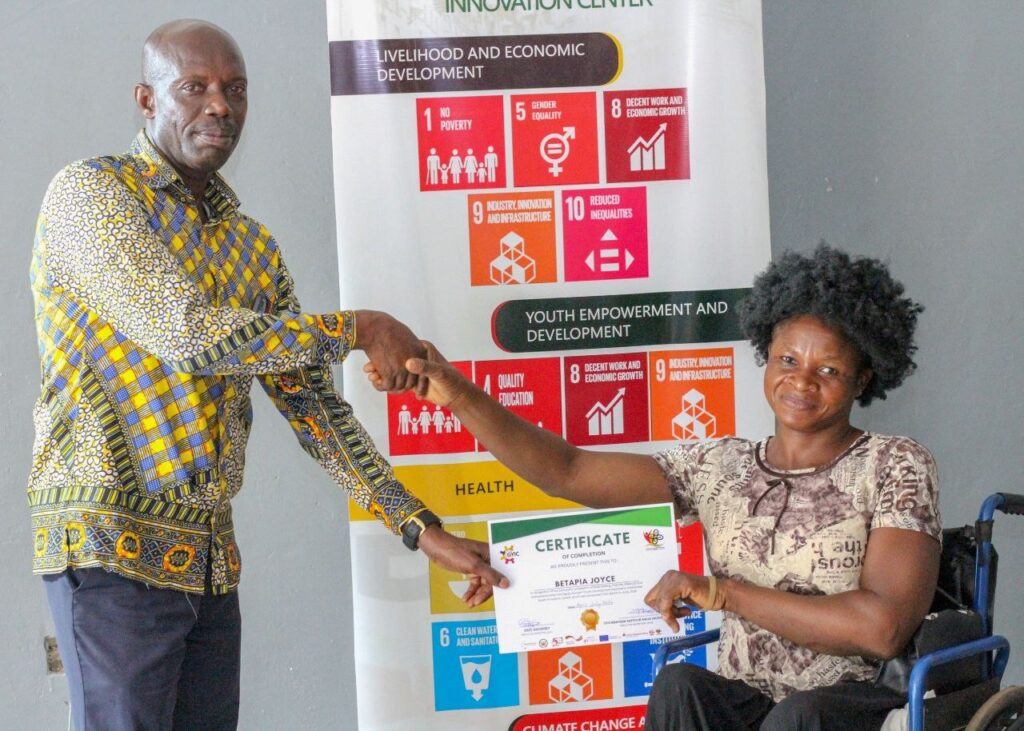
He said equipping Persons with Disabilities and migrant returnees with relevant vocational and entrepreneurial skills not only creates sustainable livelihoods but also expands the region’s productive workforce.
“The achievements of these graduates remind us that inclusion is not merely a social responsibility, it is an economic imperative for building resilient communities and a prosperous Ghana,” he stated.
Beyond benefiting the 50 graduates the project is expected to generate wider economic impact across the Sunyani Municipality through increased local production, improved household incomes, stronger value chains and new employment opportunities.
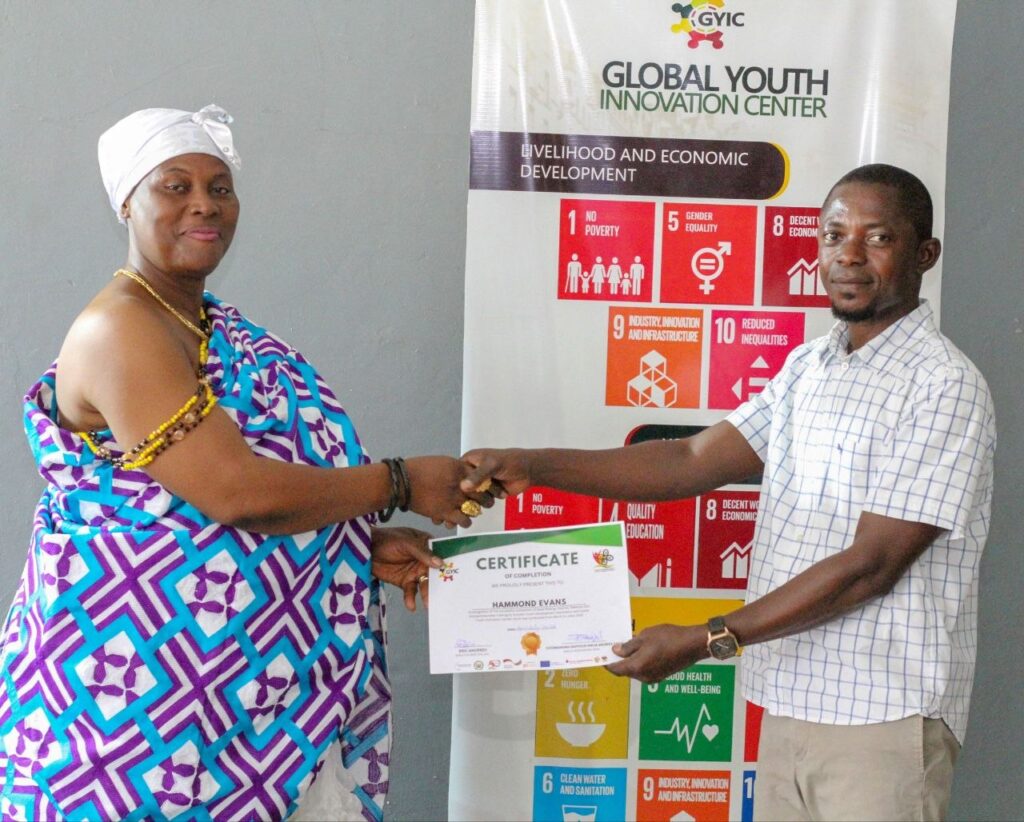
Officials believe the establishment of businesses in bakery, cosmetology, soap production and bead making will stimulate local markets while demonstrating the economic value of investing in marginalised populations.
The initiative also seeks to challenge stereotypes surrounding disability and migrant reintegration by showcasing the capabilities of beneficiaries as productive entrepreneurs and business owners.
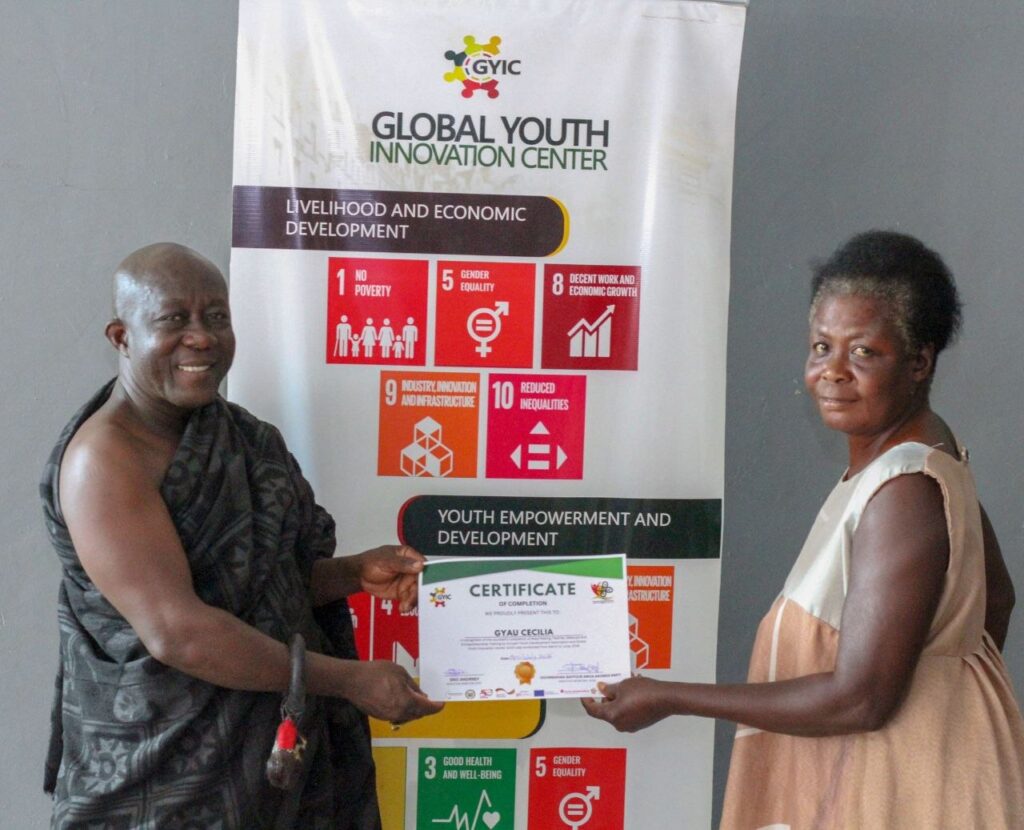
To ensure long term sustainability, GYIC has established post training support mechanisms including business mentorship, market linkages, institutional partnerships and access to livelihood support services. Selected graduates will also be eligible for the organisation’s revolving interest free microloan scheme to help expand their enterprises.
The Skills4Inclusion Project aligns with Ghana’s commitment to promoting decent work, disability inclusion, migrant reintegration and the Sustainable Development Goals. It serves as a model for inclusive economic development by demonstrating that targeted investment in vulnerable groups can generate lasting economic and social benefits.
GYIC expressed appreciation to the German Sparkassenstiftung Western Africa for funding the project through the Support for Local Training Providers in Ghana initiative on behalf of the Ghanaian European Centre for Jobs, Migration and Development of the German Federal Ministry for Economic Cooperation and Development (BMZ), with co-funding from the European Union and implementation support from GIZ Ghana.
As the graduates begin the next phase of their entrepreneurial journeys they do so with renewed confidence, practical skills and the determination to build sustainable businesses that will support their families, strengthen local economies and contribute to a more inclusive Ghana.
By: Michael Walier