



Security analyst Dr. Franklyn Kwasi Biney has warned that the persistent violence in Bawku must be treated as a national security threat, not merely a tribal or local skirmish.
Speaking to ABC News GH following the assassination of Kusasi Chief Abdul-Malik Azenbe in Kumasi, Dr. Biney stressed that the implications of the Bawku crisis stretch far beyond the Upper East Region.
“The conflict in Bawku is a business of all of us,” he said, noting that cross-border dynamics and political interference have continued to inflame tensions.
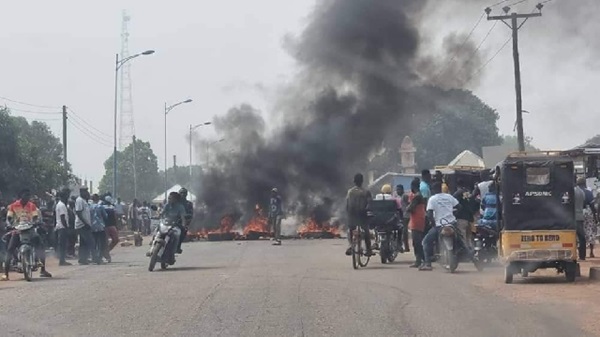
The killing of Kaad-Naba Tiewin II, a key Kusasi leader, at his residence in Asawase by unknown gunmen has heightened fears of reprisals and instability.
Dr. Biney warned that the porous northern border with Burkina Faso has worsened the situation, allowing armed elements to enter Ghana.
“Instability in Burkina Faso has led to influx of people, some may be armed, risking Bawku and surroundings,” he explained, highlighting the external dimension of the crisis.
He cautioned that “Burkina Faso may exploit the conflict,” pointing to the proliferation of arms as an escalating factor in the conflict.
Biney further criticised the state’s apparent lack of urgency and strategic intelligence coordination.
“We in Ghana, we don’t make use of intelligence very well until it happens,” he lamented. According to him, intelligence agencies must move away from reactionary approaches and instead adopt proactive mechanisms to intercept threats before they escalate.


The Bawku crisis, he said, cannot be resolved through superficial mediation efforts alone. “There is politicking at every point in the resolution of the matter,” he noted, warning that such interference has prolonged the conflict and eroded trust in peace efforts.
The analyst also called for neutrality in conflict mediation, urging stakeholders to detach political interests from the process. His remarks come at a time when tensions are likely to flare, following the cold-blooded murder of a respected Kusasi chief outside Bawku. “We don’t have to allow the conflict to escalate; it will be very difficult to de-escalate,” he warned, emphasizing that national-level leadership must step in decisively before the situation spins further out of control.