






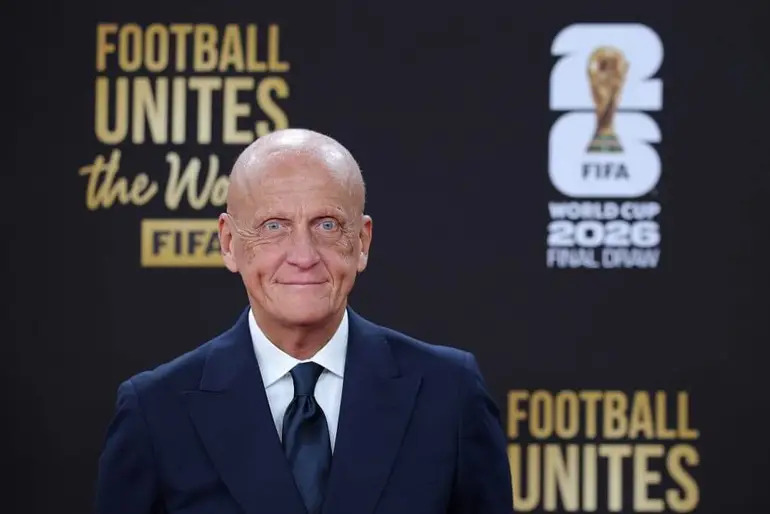
FIFA’s head of refereeing, Pierluigi Collina, has defended the officiating in Argentina’s dramatic 3-2 victory over Egypt in the Round of 16 of the FIFA World Cup, dismissing allegations of bias and insisting that match officials performed their duties with complete independence.
Speaking in an interview published on FIFA’s official website on Thursday, Collina acknowledged that refereeing decisions will always be scrutinised but condemned suggestions that the integrity of match officials had been compromised following Egypt’s controversial exit from the tournament.
“With such a high number of matches played in a relatively short period of time, it is normal that some things do not go as expected,” Collina said. “When that happens, they [referees] are ready to work even harder to ensure they are fully prepared for the next match.
“Of course, constructive discussion about decisions will always be part of football, but unfounded allegations have no place in our sport.”
He warned that accusations questioning the honesty of referees could have serious consequences, including exposing officials and their families to abuse and threats.
“Nobody can question the integrity of the FIFA World Cup match officials … Equally, nobody can claim that FIFA refereeing can be influenced by anyone, not even by the FIFA president [Gianni Infantino],” he added.
“Match officials make honest decisions and, just like players and coaches, they always try to do their best.”
Egypt’s frustration followed a dramatic Round of 16 encounter in which Argentina recovered from a two-goal deficit with just 11 minutes remaining before Enzo Fernandez struck a stoppage-time winner to seal a remarkable comeback.
After the match, Egypt coach Hossam Hassan alleged that there may have been pressure on the referee to keep Argentina in the competition, claiming his side had been “cheated” out of a place in the quarter-finals.
The Egyptian Football Association also lodged a complaint over the officiating, accusing the Video Assistant Referee (VAR) team of improperly applying the protocol during key moments of the match.
Among Egypt’s biggest grievances was the disallowed goal scored by Mostafa Zico in the second half. The federation argued the strike should have stood, insisting the foul identified in the build-up did not exist. Egypt also believed Mohamed Salah should have been awarded a foul moments before Argentina launched the attack that led to the decisive goal.
Collina, however, maintained that the VAR intervention was correct after officials identified a foul by Marwan Attia on Argentina defender Lisandro Martinez during the attacking possession phase.
“We believe that a foul is a foul,” Collina explained. “Regardless of whether the foul appears ‘obvious’, if the referee did not see it on the field of play, the VAR can intervene.”
Addressing Egypt’s appeal for a foul involving Salah before Argentina’s winning goal, Collina said both the referee and the VAR concluded that the challenge between Salah and Julian Alvarez amounted to normal football contact.


“Stepping on an opponent’s foot is a foul, whereas a defender who touches the ball first and then makes normal football contact has not committed a foul,” he said.
Although he accepted that some refereeing decisions will always be open to interpretation, Collina said FIFA remains satisfied with how VAR has been implemented throughout the tournament, expressing confidence in the consistency and professionalism of the match officials.