






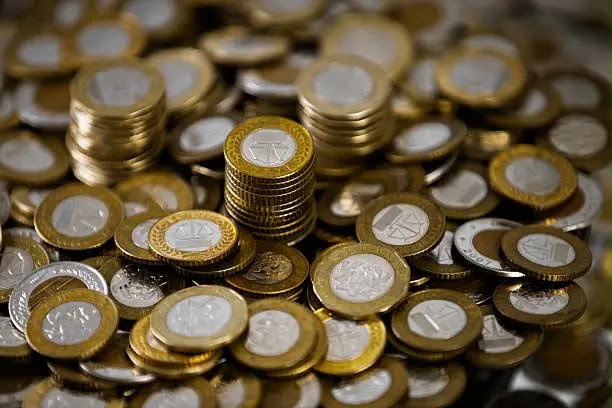
The Bank of Ghana (BoG) has warned traders, transport operators, businesses and members of the public against refusing to accept Ghana cedi coins in transactions, stressing that such action violates the law and could attract criminal penalties.
The warning follows increasing reports of businesses and individuals rejecting lower denomination coins, including 1, 5, 10, 20 and 50 pesewa coins, as well as GH¢1 and GH¢2 coins, despite their continued legal status as currency.
In a public notice issued on July 22, 2026, the central bank clarified that all Ghana cedi coins currently in circulation remain valid legal tender and have not been withdrawn or demonetised.


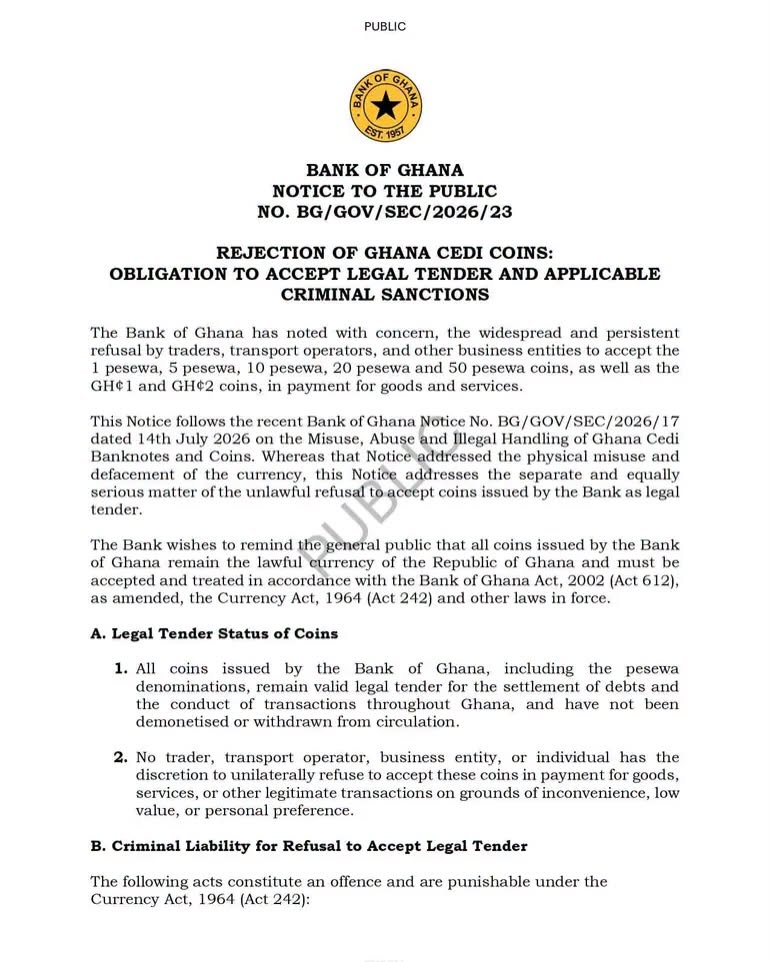
The BoG stated that no individual or business has the authority to refuse accepting coins simply because they are considered inconvenient, have a lower value or are difficult to handle during transactions.
“All coins issued by the Bank of Ghana, including the pesewa denominations, remain valid legal tender for the settlement of debts and the conduct of transactions throughout Ghana, and have not been demonetised or withdrawn from circulation.
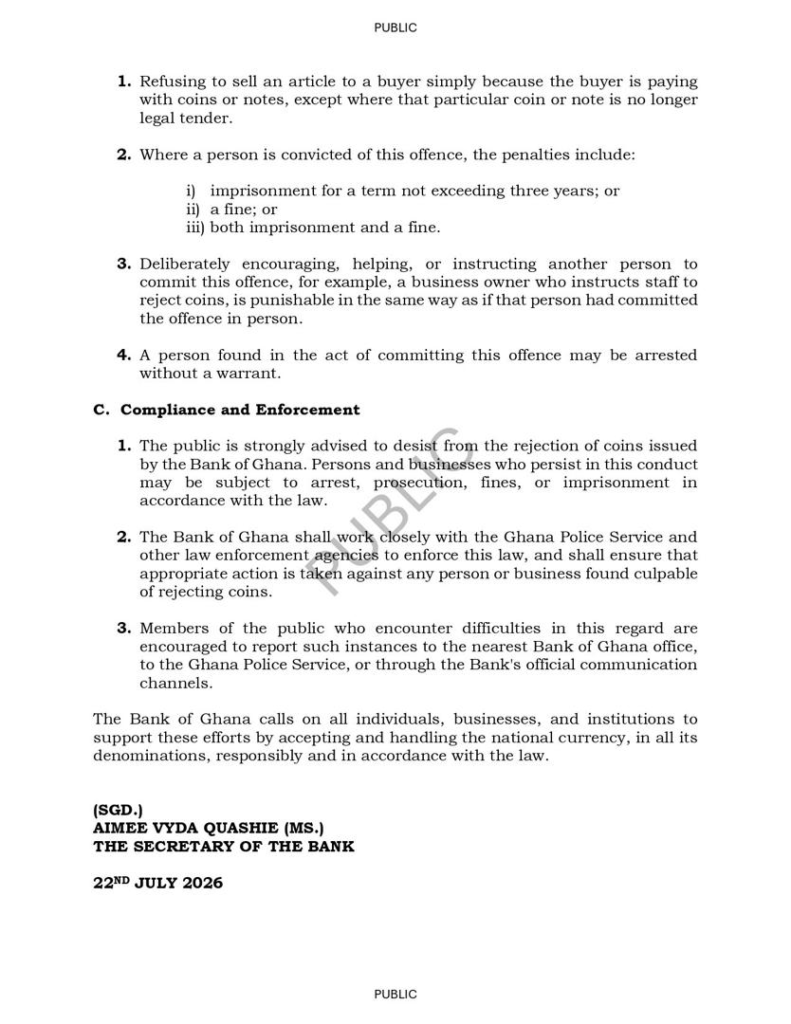
“No trader, transport operator, business entity, or individual has the discretion to unilaterally refuse to accept these coins in payment for goods, services, or other legitimate transactions on grounds of inconvenience, low value, or personal preference,” the Bank noted.
The central bank further explained that under Ghana’s Currency Act, refusing to provide goods or services solely because a customer pays with valid coins or banknotes constitutes an offence.
Persons found guilty could face a fine, imprisonment of up to three years, or both, depending on the circumstances of the offence.
The BoG added that individuals who encourage or instruct others to reject valid Ghanaian currency may also be held liable under the law.
It also disclosed that offenders may be arrested without a warrant and announced plans to collaborate with the Ghana Police Service and other relevant authorities to ensure compliance.
The Bank of Ghana warned that widespread rejection of coins could negatively affect the country’s payment system, particularly within the informal sector where small-value cash transactions remain widespread.
According to the central bank, refusing smaller denominations could distort pricing, encourage unnecessary rounding of prices and weaken public confidence in the cedi’s role as a medium of exchange.
The BoG emphasised that maintaining the circulation of all valid denominations is essential to ensuring an efficient cash payment system and protecting consumers who rely on physical currency for everyday transactions.
The public has been encouraged to report cases involving the rejection of valid Ghana cedi coins through the Bank of Ghana’s official channels, its offices nationwide, or the Ghana Police Service.