






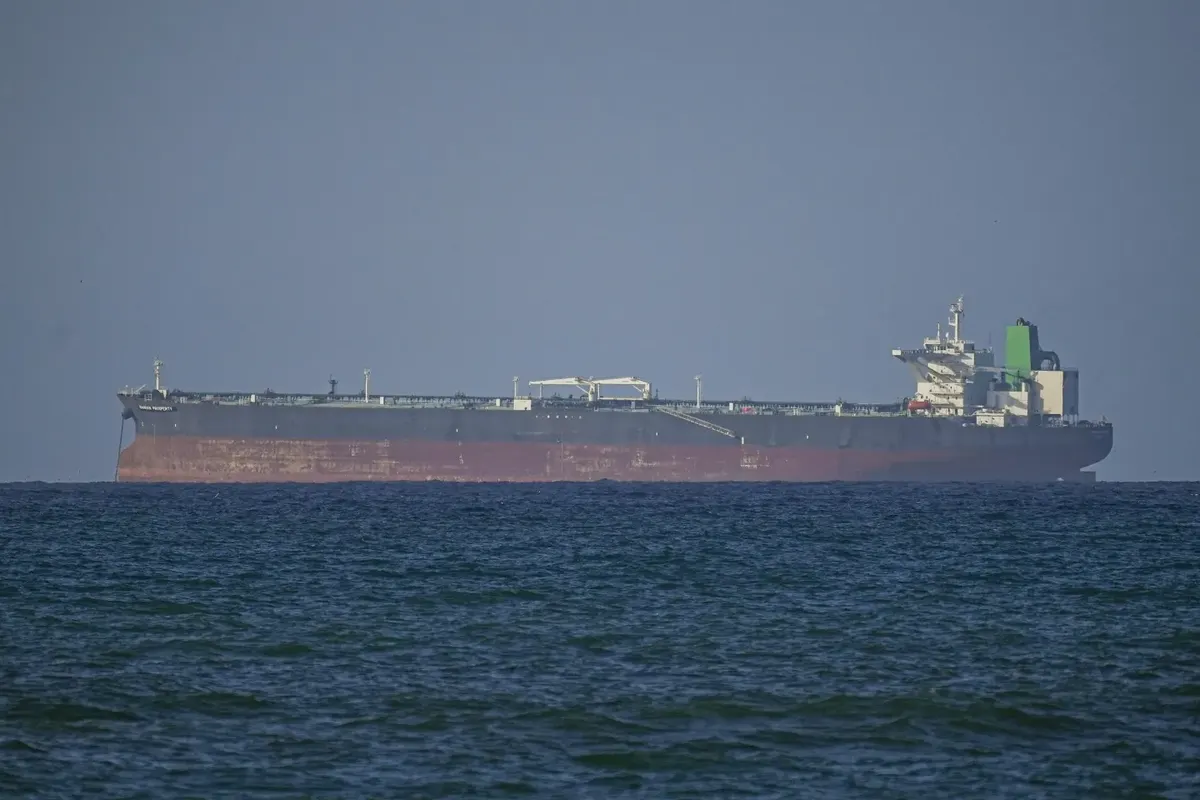
Global oil prices fell sharply on Tuesday, dropping to their lowest levels in three weeks after senior US officials expressed optimism that negotiations could soon lead to the reopening of the strategically important Strait of Hormuz.
Brent crude, the international benchmark for oil, fell by nearly 5% to below $80 per barrel, while US West Texas Intermediate (WTI) crude also declined by more than 5% to around $76 a barrel. Both benchmarks reached their lowest point since July 13 as traders responded to expectations that disruptions to global oil supplies could soon ease.
The renewed optimism followed comments from US Secretary of State Marco Rubio and Treasury Secretary Scott Bessent, who indicated that diplomatic efforts involving Iran and Oman had made significant progress.
Rubio told reporters at the State Department that discussions aimed at restoring commercial shipping through the vital waterway were advancing.
“There’s been progress made in those talks, but not finality yet. We’re hoping that will happen very shortly,” he said.
Bessent also suggested that an agreement could be reached within days.
“There was a chance we may have a deal today or tomorrow to open the strait and move towards a more normalised position in this conflict,” he told CNBC.
Asked whether Iran would be permitted to charge vessels transiting the waterway, Bessent replied:
“It would be freedom of movement.”
Despite the encouraging signals from Washington, the details of any potential agreement remain unclear. Iran has insisted it is not engaged in direct negotiations with the United States, maintaining instead that discussions are taking place with Oman, which has been serving as a mediator.
Iran’s foreign ministry said talks with Oman over a new mechanism governing vessel movements through the Strait of Hormuz had yielded positive results. Qatar, another key intermediary between Tehran and Washington, also confirmed that diplomatic efforts were continuing alongside other mediators, although it acknowledged that no direct US-Iran talks are currently planned.
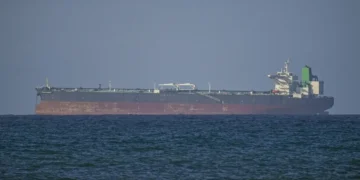
The Strait of Hormuz, located between Iran and Oman, is one of the world’s most critical maritime routes, carrying roughly one-fifth of global daily oil and liquefied natural gas supplies before the conflict erupted in late February.
Since hostilities began, Iran has largely halted shipping through the strait, while the United States has enforced a naval blockade on Iranian ports. Meanwhile, Yemen’s Iran-backed Houthi rebels have maintained a separate blockade on Saudi ports along the Red Sea since July 20, further complicating global shipping routes.


The deteriorating security situation has increased risks for commercial vessels operating in the region. On Tuesday, an Indian-flagged ship was struck and sunk near Yemeni waters by a projectile, according to India’s shipping minister, although all 14 crew members were safely rescued.
Analysts say the current threat to oil shipments in the Middle East is the most severe since the conflict began, even as hopes for a diplomatic breakthrough continue to influence market sentiment.
“Investors are acutely aware of how many times we’ve already been at this point in the war and how fragile the process of securing lasting agreements can be,” said Danni Hewson, Head of Financial Analysis at AJ Bell.
The prolonged disruption has driven fuel prices higher worldwide. In the United Kingdom, the average cost of petrol has climbed to £1.60 per litre, according to the RAC motoring group, while in the United States average gasoline prices have risen above $4 per gallon, with diesel nearing $5.40 per gallon.
Oil prices have fluctuated sharply throughout the conflict, surging above $120 per barrel during periods of heightened tensions before retreating whenever diplomatic progress appeared likely.
The volatility has boosted profits for major energy companies including BP, Shell, Chevron and Exxon Mobil. However, Hewson noted that despite their strong earnings, oil producers remain “at the mercy” of US President Donald Trump’s “machinations.”
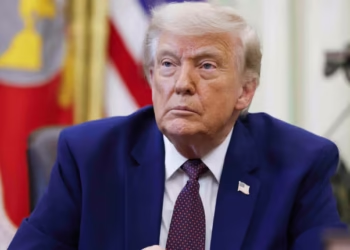
On Monday, Trump warned that Iran faced its “last chance” to reach an agreement allowing commercial shipping to resume through the Strait of Hormuz, adding that he had called off “massive” military strikes to give negotiations another opportunity.
Lower oil prices also lifted investor confidence on Wall Street, with US stock markets trading higher on Tuesday. The gains were further supported by strong corporate earnings linked to continued investment in artificial intelligence, helping to ease concerns over rising energy costs.