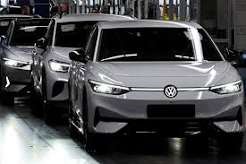







German automotive giant Volkswagen has approved plans to cut another 50,000 jobs by 2030 as part of the biggest restructuring programme in the company’s nearly nine-decade history.
The latest reduction comes on top of 50,000 job cuts already announced by the company in March, bringing the total number of positions Volkswagen plans to eliminate by 2030 to about 100,000.
Volkswagen Chief Executive Officer Oliver Blume had already warned in July that the company was considering an additional 50,000 job reductions as it sought to address its cost disadvantage and remain competitive in a challenging global automotive market.
Following the latest approval, Blume described the restructuring as a “strong signal” for the future of Volkswagen, saying the company was “taking responsibility for our entire workforce”.
Volkswagen said the workforce reduction was necessary because of changing demand, technological developments and the need to improve the group’s competitiveness.
The company said a “fundamental adjustment of the global workforce capability is necessary” and that an adjustment of approximately 50,000 positions, including management roles, would be required.
The restructuring will affect the wider Volkswagen Group, which includes brands such as Audi, Porsche, Skoda, Seat, Bentley and Lamborghini.
The carmaker is also reviewing the future of four German plants in Emden, Zwickau, Hanover and Neckarsulm, where production capacity currently exceeds demand.
Volkswagen said it was assessing alternative uses for the facilities rather than immediately announcing their closure.
As part of its wider restructuring, the company plans to reduce the number of models it produces by 50 per cent by 2035 and cut the complexity of its product range by 75 per cent.
It will instead focus on what it describes as its “most compelling vehicles” and increase production volumes for individual models to help lower costs.
The restructuring comes as Volkswagen faces falling profits, weaker sales and intensifying competition, particularly from Chinese carmakers that have expanded rapidly with lower production costs and new technologies.
The company has also been affected by declining sales in China, previously one of its biggest markets, while its US business has faced additional pressure from tariffs on imported vehicles.
Volkswagen employed more than 660,000 people worldwide as of 2025.


Shares in the company rose by about 7 per cent in Frankfurt on Friday following news of the restructuring plan.
Christianne Benner, president of industrial union IG Metall and deputy chair of Volkswagen’s Supervisory Board, said the company had “fought hard for good solutions” to address what she described as a “crisis situation”.
The latest measures represent a major overhaul of Volkswagen as the German carmaker attempts to reduce costs, simplify its operations and respond to growing competition in the global automotive industry.