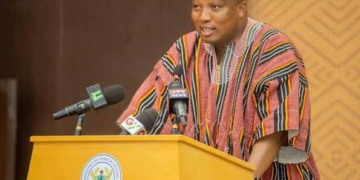







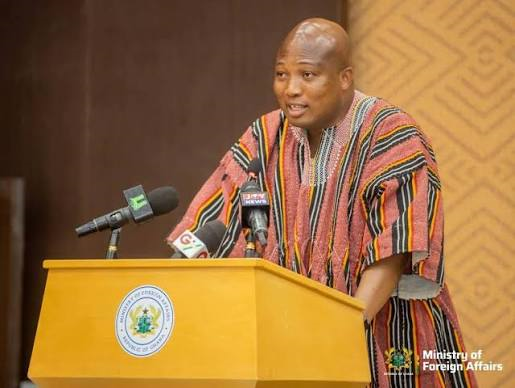
Foreign Affairs Minister, Samuel Okudzeto Ablakwa, has disclosed that the government spent GH¢49.72 million to evacuate 1,964 Ghanaians from South Africa following xenophobic attacks.
According to the Minister, the expenditure covered the full evacuation operation, including chartered flights, ground transportation, accommodation, feeding, medical care, reintegration support and the repatriation of the remains of two Ghanaians who died during the crisis.
Speaking at a media briefing on Monday, September 7, Mr Ablakwa said the government had fully settled all expenses related to the exercise, with no outstanding liabilities.
He explained that GH¢38.84 million of the total expenditure went into the operational aspects of the evacuation, including air travel, ground transport, feeding, hotel accommodation in South Africa, as well as medical and hospitalisation costs.
An additional GH¢10.8 million was used to support the returnees with reintegration and transportation allowances.
Each of the 1,964 evacuees received GH¢5,000 as a reintegration grant and GH¢500 for transportation, giving each returnee GH¢5,500 in direct financial support.
The government also spent GH¢84,274 to transport the remains of two Ghanaians who died during the crisis back to Ghana.
Funding for the exercise
Mr Ablakwa disclosed that the government itself provided GH¢33.72 million towards the evacuation, while Engineers and Planners, owned by businessman Ibrahim Mahama, contributed GH¢16 million.
He expressed appreciation to Mr Mahama for supporting the evacuation effort and what he described as his commitment to the welfare of Ghanaian nationals affected by the crisis.


Beyond the financial assistance, the Minister said several measures were put in place to help the returnees recover from the experience and resume their lives.
Psychologists and trauma counsellors were made available to provide emotional and psychological support, including follow-up sessions within communities.
Faith-based organisations and civil society groups also offered additional emotional and spiritual assistance to the returnees.
The evacuees received free medical screening through Port Health, while the National Health Insurance Authority facilitated their registration onto the National Health Insurance Scheme.
Telecommunications companies also provided free SIM cards loaded with airtime and data to help the returnees reconnect with their families and communities.
Other forms of assistance included food packages from the National Buffer Stock Company, while the International Organization for Migration, NADMO and the Red Cross provided psychosocial support, logistics, hot meals and water.
The Church of Pentecost also provided free accommodation for some of the returnees in Pretoria, Kempton Park and Johannesburg.
Mr Ablakwa said the government was now exploring longer-term economic empowerment programmes aimed at helping the returning nationals rebuild their livelihoods and successfully reintegrate into their communities.