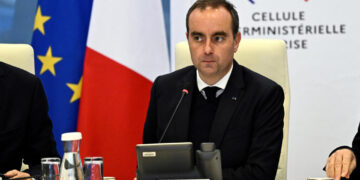







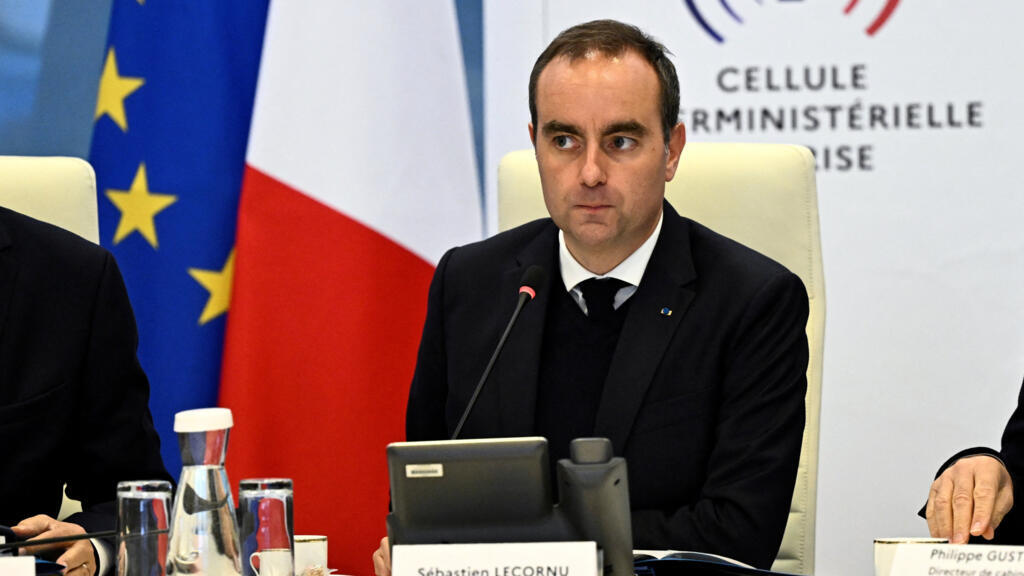
French Prime Minister Sébastien Lecornu has asked local authorities to consider imposing localised curfews in parts of the country following violent protests that led to widespread looting, arson and clashes with police.
Lecornu announced the measure after an emergency meeting with government ministers on Monday, October 19, as authorities sought to prevent further unrest in major French cities.
He said the proposed restrictions would be limited to specific areas, including locations around public transport hubs and prominent public spaces.
“The prefects will discuss this with the mayors and their local chambers of commerce and industry,” he said.
Lecornu described the proposed curfews as “very limited” and “localised”, indicating that they would target areas considered vulnerable to further violence rather than impose blanket restrictions across entire cities.
He also defended the police response to the unrest, noting that no one had been killed during Saturday’s violence despite extensive damage to property.
The prime minister blamed what he described as the “ultra-left” for fuelling the unrest, while attributing some of the violence to criminal elements. He pledged convictions for those arrested and a “massive investigation” to identify people who had evaded arrest.
Macron Rejects Interior Minister’s Resignation
Meanwhile, President Emmanuel Macron has rejected the resignation of Interior Minister Laurent Nuñez, insisting that he remain in office to maintain continuity in the command of the country’s police and security forces.
Nuñez offered to resign following criticism of the authorities’ handling of the demonstrations, which escalated into riots in several cities over the weekend.
Macron’s office said the president had instructed the minister to ensure transparency over failures in security planning and intelligence gathering that preceded the violence. He also called for new policing approaches to be introduced as quickly as possible.
Nuñez acknowledged that authorities had lost control in some major cities during Saturday’s unrest, when hundreds of businesses were reportedly looted.
“I submitted my resignation because I am responsible for everything that is happening,” he told France Inter radio.
“Now, the real issue is ensuring that this doesn’t happen again. We obviously need to be better at anticipating the kind of mobilisation that is unfolding.”
The interior minister attributed the violence to looters and far-left activists, adding that police tactics needed to adapt to groups capable of moving rapidly between locations.
Protests Escalate Across Major Cities
The demonstrations were fuelled by public anger over rising living costs, deteriorating public services and concerns about conditions in schools.
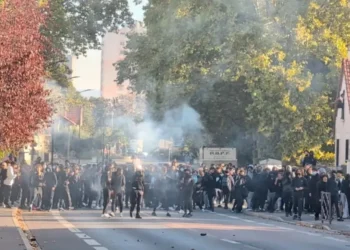
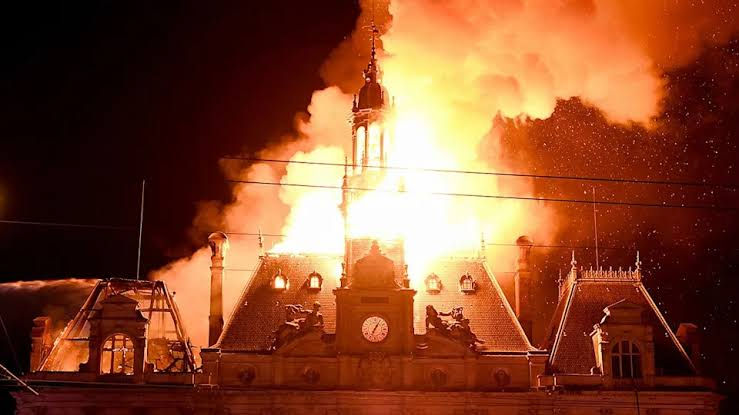
What began as nationwide protests escalated into violent confrontations on Saturday, with groups attacking public buildings, looting shops and setting fires. A town hall was torched, while businesses and other properties were damaged in several locations.
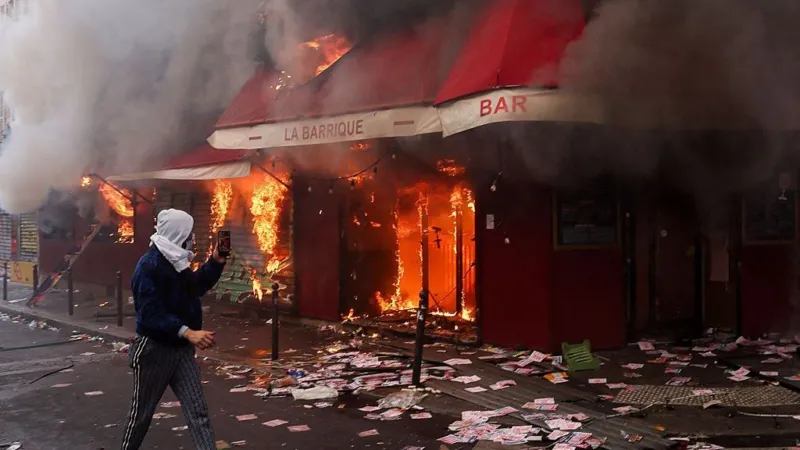
Further clashes erupted on Sunday in Paris, Marseille, Lyon and other cities, prompting riot police to intervene to prevent additional looting.
In Limoges, central France, flames engulfed the city’s 19th-century town hall, causing its roof to collapse and leaving the historic building close to destruction. A tourism office in Lyon was also set ablaze during the unrest.


By Sunday evening, authorities had reported at least 2,400 arrests nationwide as security forces continued operations against those suspected of participating in the violence.
Macron condemned the destruction in a televised address on Sunday, expressing anger and shame over the scenes and insisting that violence could not be justified by public grievances.
He also called for a distinction between peaceful demonstrators raising concerns about living costs and education and those involved in destruction and looting.
Justice Minister Gérald Darmanin, meanwhile, criticised the security services’ handling of the unrest, arguing that although they were effective against terrorism and organised crime, they had been less successful in responding to far-left protest groups.
The government’s response is now focused on preventing further clashes, improving security coordination and identifying those responsible for the damage as French authorities consider targeted curfews and revised policing measures.