







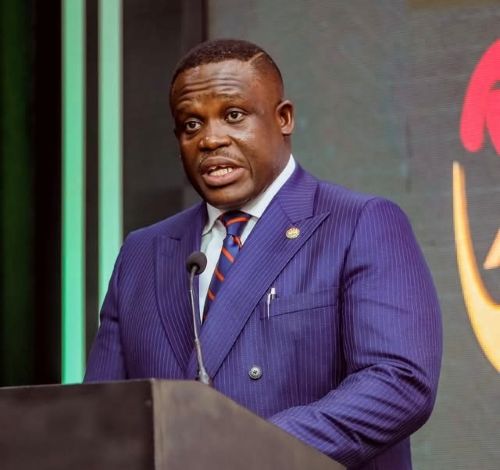
Television stations operating on Ghana’s National Digital Terrestrial Television (DTT) platform will be required to pay a monthly tariff of US$7,000 from January 2027, Communications, Digital Technology and Innovations Minister Samuel Nartey George has announced.
The new charge forms part of measures to establish a more sustainable financing structure for the country’s DTT platform, following a review of its operations and funding arrangements.
Speaking at the Accountability Series on Monday, September 7, Mr George said a committee constituted after the review had proposed a graduated tariff support mechanism to complement the existing subsidised national tariff.
According to the Minister, the new arrangement is intended to gradually increase the financial contribution of television stations while ensuring continued support for broadcasters during the transition.


“I set up a committee, and that committee has recommended a sustainable cost-sharing framework and a graduated tariff support mechanism to complement the subsidised national tariff, which will see all TV stations on our DTT platform pay US$7,000 per month during the initial implementation years in a graduated manner,” he said.
The revised tariff is expected to form part of a broader effort to reduce the financial burden on government and create a more sustainable model for operating the national DTT infrastructure.
ICT laws under review
Mr George also disclosed that the government is undertaking a review of 15 pieces of legislation governing Ghana’s information and communications technology sector.
He said the exercise is aimed at modernising the country’s legal framework to reflect developments and emerging needs within the digital economy.
The Minister noted that approximately half of the review process has been completed, with stakeholder consultations already concluded on 10 priority bills.
Among the legislation under review are the Data Harmonisation Bill, Cybersecurity Authority Bill, Ghana Innovation and Startup Bill and the National Communications Authority Bill.
Six other proposed laws are also included in the legislative review as government works to update the regulatory framework for Ghana’s rapidly evolving digital sector.