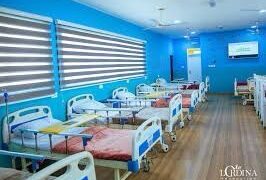







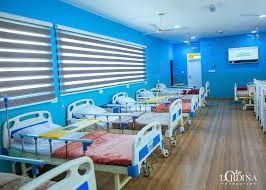
Today, many families and individuals in Ghana fear one painful statement when they visit hospitals seeking care: “There is no bed.”
These words can turn hope into panic. A sick person is rushed to the hospital. The family believes help will come. They expect treatment, oxygen, and a bed.
But at the emergency unit, they hear, “No bed.”
They move to another hospital. Again, no bed. They try another place. Still, no bed. The patient becomes weaker, the family is begging, time is passing, and life is slipping away.
Then the worst happens. The patient dies.
Suddenly, there is space. Not in the emergency ward, not on a hospital bed, and not where treatment could have saved a life. The space is in the mortuary.
This is the painful truth behind Ghana’s no bed syndrome: the living are turned away, but the dead are received.
No bed syndrome is not just about beds. It is about a health system failing people at their most desperate moment. It is about overcrowded hospitals, full emergency wards, overworked doctors and nurses, weak ambulance services, poor planning, and families moving from one hospital to another while their loved ones suffer.
For ordinary Ghanaians, the hospital is a place of hope. When someone is seriously sick or injured, the first thought is, “Let us take them to the hospital.” But what happens when a sick person gets to the hospital alive, only to be told there is no bed for them?
A hospital bed is not just a mattress. It is a chance. It is where oxygen can be given, a nurse can watch a patient, a doctor can act quickly, medicine can be given, bleeding can be stopped, pain can be controlled, and life can be saved.
A mortuary space is different. It comes after the fight is over. It does not save life. It only receives the body after life is gone.
So when people say there is no bed in the hospital but there is space in the mortuary, they are speaking from pain. They are asking a serious question: Why must a Ghanaian die before there is space?
A pregnant woman in danger may be moved from hospital to hospital. A road accident victim may be delayed. A child struggling to breathe may wait too long.
A patient can survive if treatment comes early. A patient can die if help delays. That is why “no bed” is not a small excuse. It can be the difference between life and death.
Health workers also suffer under this system. Many doctors and nurses are doing their best with very little. They work long hours, face angry families, and see patients they want to help but cannot help properly because the ward is full, equipment is not enough, or there are too few staff members.
Ghana needs more hospital beds, better emergency centres, more doctors, nurses, midwives, specialists, and working ambulances. Ghana also needs a system that can quickly show which hospital has space before a patient is carried there. Ghana needs better planning so that people are not moved around in panic.


It is not enough for a hospital to say, “We are full.” If one hospital is full, there must be a quick way to know where the patient can go next. Families should not have to guess. Patients should not become travellers in search of a bed while death follows them.
The mortuary should never become the first place where the system finally says, “There is space.”
A nation that can build offices, roads, hotels, and big projects must also build a health system that protects life.
No bed syndrome affects poor families the most. Rich people may call someone they know, rush to private hospitals, or pay large sums of money. But what about the ordinary trader, farmer, cleaner, driver, student, pensioner, or unemployed young person? What happens to the family with no connection and no money?
This is why the public must not keep quiet. No bed syndrome should not become normal. We should not accept it as “one of those things.” We should not wait until a famous person dies before we become angry. Every life matters, whether known or unknown, rich or poor, young or old.
The people who die because there is no bed are not numbers. They are mothers, fathers, children, brothers, sisters, friends, workers, and neighbours. They had dreams, names, and people waiting for them to return home.
When they die after being turned away, families do not only bury a body. They bury trust, confidence in the system, and the belief that the hospital will be there when they need it.
Ghana must treat the no bed syndrome as a national emergency. Leaders must stop waiting for public anger before acting. Hospitals must expand. Emergency wards must be properly equipped. More health workers must be trained and posted where they are needed.
Ambulance services must be strengthened. There must be a national system that shows available beds in real time, so that hospitals, ambulances, and families can quickly know where to take a patient.
There must also be accountability. When a patient dies after being moved from place to place, the public deserves answers. What happened? Which hospital was contacted? Why was the patient not admitted? Was there really no bed? Was there no staff? Was there no equipment? Could the death have been prevented?
No Ghanaian should be carried from hospital to hospital while begging for a chance to live. No family should be told there is no bed, only to later find space in the mortuary. No patient should die simply because the system was not ready.
The mortuary has a purpose, but it must not become the symbol of a failed health system. The hospital ward should be where space is found first. The emergency room should be where the patient is received first. The living must come before the dead.
Ghana can do better. Ghana must do better. A country that has space for dead bodies must find space for living patients.
By: Dr Gervin A. Apatinga (PhD)
[email protected]