






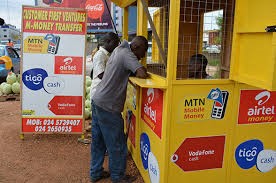
Ghana’s mobile money sector remains on a strong growth trajectory, with Bank of Ghana data showing notable gains in both transaction value and usage levels.
Latest figures from the Bank of Ghana’s May 2026 Summary of Economic and Financial Data show that the value of mobile money transactions reached GH¢493.2 billion in April 2026, up from GH¢365.0 billion in the same period in 2025. This represents a year-on-year increase of about 35.1 per cent, underscoring sustained expansion in the use of digital financial services.
Transaction volumes also recorded significant growth, rising from 778 million in April 2025 to 967 million in April 2026. The increase points to not only higher monetary value flowing through mobile money platforms but also a growing frequency of everyday digital transactions among users.
The data further highlight how mobile money has evolved beyond basic person-to-person transfers to become a central component of Ghana’s financial ecosystem. It now facilitates a wide range of activities including merchant payments, utility bill settlements, informal sector trading, savings, and small business operations.
Registered mobile money accounts increased from 75.2 million to 83.0 million over the review period. Active accounts—defined as those that recorded at least one transaction within 90 days—also rose from 24.2 million to 26.0 million, indicating deeper and more consistent engagement with the service rather than dormant registrations.
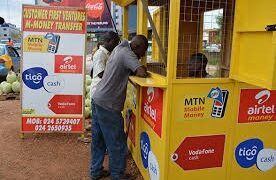
On the supply side, the agent network continued to expand significantly. Registered mobile money agents increased from 911,000 to 992,000, while active agents grew more sharply from 414,000 to 534,000. The expansion of active agents is particularly important for extending financial access to underserved and rural communities where formal banking infrastructure remains limited.


A notable trend in the period under review is the growing accumulation of funds within mobile wallets. The total float balance rose from GH¢28.2 billion in April 2025 to GH¢36.7 billion in April 2026, suggesting that users are increasingly treating mobile money wallets not just as transactional tools but also as short-term storage or savings instruments.
Interoperability between networks also continued to strengthen. The value of cross-network transfers increased from GH¢4.0 billion to GH¢5.8 billion, while the volume of such transactions rose from 23.1 million to 31.7 million. This reflects a more integrated and flexible digital payments environment, allowing users to transact seamlessly across different mobile money platforms.
When compared with other payment channels, mobile money’s dominance becomes even more evident. Cheque transactions recorded a value of GH¢36.6 billion in April 2026, representing less than one-tenth of mobile money’s total. GhIPSS Instant Pay transactions stood at GH¢79.0 billion, while internet banking transactions reached GH¢42.0 billion—both significantly lower than mobile money’s performance.
Overall, the data reinforce mobile money’s position as the leading payment channel in Ghana, both in terms of transaction value and volume. What began as a convenient alternative to cash has now become the primary means through which millions of Ghanaians participate in the formal and informal economy.