







A Development Economist and policy analyst with Africa Policy Lens, Dr. Hayford Ayerakwa, has weighed in on the growing debate over who could lead the National Democratic Congress (NDC) into the 2028 general elections, following a recent internal survey conducted between 17th and 19th April.
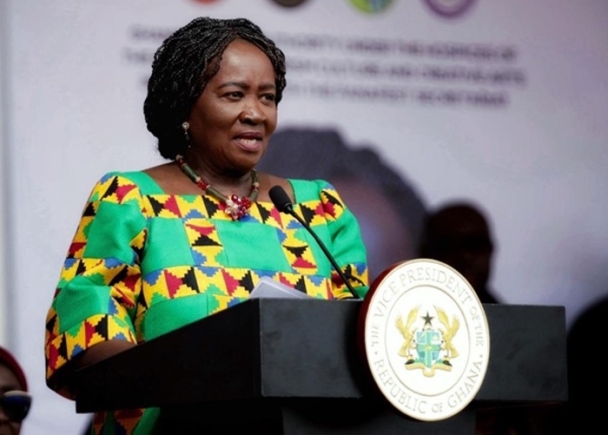
Speaking on ABC In the Morning, Dr. Ayerakwa suggested that emerging dynamics within the party’s delegate base may not necessarily favour the current Vice President, Professor Naana Jane Opoku-Agyemang as a potential successor.
According to him, while the Vice President may have strong credentials in her personal and professional life, her standing within the party’s internal structures appears to be less entrenched.
“When you look at the factors these delegates are looking at, they don’t favour the Vice President,” he stated.
He further argued that her relationship with the grassroots of the party remains a critical concern in assessing her long-term political prospects within the NDC.
“The Vice President has achieved a lot for herself in private life, when it comes to the NDC as a party, she’s seen to be more or less an alien to the party,” Dr. Ayerakwa said.
He added that her inclusion in the party’s leadership structure was largely strategic and tied to electoral calculations rather than organic party growth.
“She was brought in strategically for the party to win elections,” he noted.


Dr. Ayerakwa emphasised that internal party decisions, especially at the delegate level, are not typically influenced by personal achievements outside politics or academic and professional accolades.
“When it comes to the factors these delegates are talking about, they are not talking about your private life, and what you have achieved as a Vice Chancellor,” he said.
Instead, he stressed that loyalty, engagement, and historical contribution to the party remain central to delegate decision-making.
“They are looking at what was your contribution, what is your relationship with the base, I mean the grassroots people,” he explained.
According to him, this remains a key weakness for the Vice President in terms of internal party appeal.
“The grassroots people don’t have a relationship with the Vice President,” he concluded.
The remarks come as political discussions intensify within the NDC over potential leadership contenders ahead of the 2028 elections, with analysts closely watching delegate sentiment and internal party alignments.