






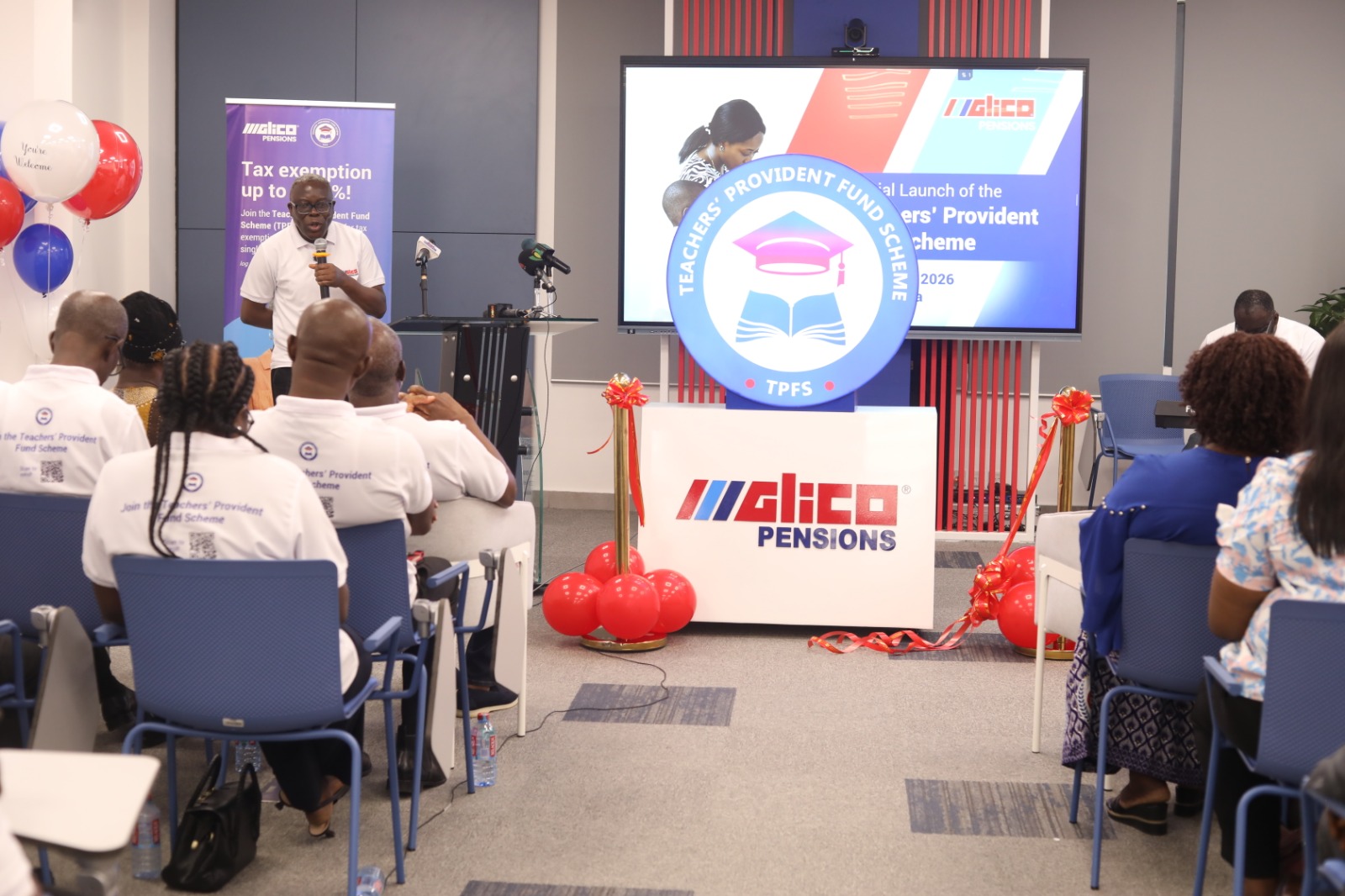
Teachers, non-teaching staff and other workers have been sensitised on Ghana’s three-tier pension system under the National Pensions Act, 2008 (Act 766) as part of efforts to strengthen retirement planning and promote long-term financial security.
The engagement held in Kumasi, facilitated by GLICO Pensions Trustee LTD, provided participants with detailed insights into the structure, contributions and benefits of the national pension framework.
Chief Executive Officer of GLICO Pensions, Belinda Dede Tandoh, urged participants to take advantage of voluntary pension schemes, particularly the third tier, to improve their retirement outcomes. She emphasised the need for participants to extend the knowledge gained to their families and communities, noting that increased awareness is critical to building a financially secure workforce.

The Head of Operations at GLICO Pensions, Cassiel Ntiswin Atuliba, delivered the main presentation, offering a comprehensive breakdown of the three-tier pension structure.

He explained that the first tier, managed by the Social Security and National Insurance Trust, requires a mandatory 13.5 percent contribution of a worker’s salary and guarantees monthly pension payments upon retirement. Benefits, he noted, are calculated based on the average of a contributor’s best three years’ salary, typically ranging between 37.5 percent and 60 percent depending on total contributions.
Mr Atuliba further outlined that the second tier, a privately managed occupational pension scheme, attracts a five percent contribution and provides lump-sum benefits at retirement.
Particular emphasis was placed on the third tier, a voluntary scheme that allows workers to contribute up to 16.5 percent of their monthly salary. The scheme offers tax advantages and provides an opportunity for workers to significantly boost their retirement income.
A key highlight of the session was the introduction of the Teachers Provident Fund Scheme (TPFS), a voluntary personal pension scheme registered under the National Pensions Regulatory Authority and designed specifically for workers in the education sector.
The scheme provides supplementary retirement income and allows contributors to access part of their savings after a minimum of three years. It also enables members to use accumulated funds as collateral for mortgages. Additional benefits include retirement packages, death-in-service support, total incapacity benefits, permanent emigration benefits, and free life insurance cover within the first three years of enrolment.
Participants were also informed about access to discounted financial products, including education policies, health insurance and general insurance packages.
Also contributing to the programme was BB Edu Consult and Supplies. Lead consultant, Boakye-Baafi Williams, underscored the importance of continuous financial education for teachers to ensure informed career and retirement decisions.


Participants described the sensitisation as timely and impactful, noting that awareness of the third tier and provident fund schemes had previously been limited.
Organisers indicated that the initiative forms part of broader efforts to promote pension literacy and encourage voluntary savings among Ghanaian workers.