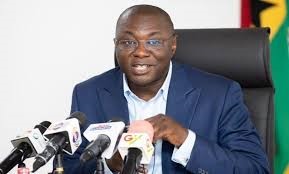







Former Finance Minister and Ranking Member on Parliament’s Finance Committee, Mohammed Amin Adam, has formally petitioned the International Monetary Fund (IMF) over concerns stemming from the Bank of Ghana’s audited 2025 financial statements, warning of potential risks to Ghana’s macroeconomic stability.
In a detailed communication addressed to the IMF’s Ghana Mission Chief under the Extended Credit Facility (ECF) programme in Washington, D.C., Dr Amin Adam called on the Fund to intensify oversight as Ghana works toward consolidating gains made under the programme.
While acknowledging the IMF’s role in supporting Ghana’s economic recovery, he stressed the need for vigilance, urging that “greater attention is paid to safeguarding the durability of these gains” as the country prepares to exit the programme.
Central to his concerns is what he described as a deteriorating negative equity position at the central bank. He cited figures indicating that the Bank of Ghana’s negative equity widened significantly—from GH¢58.62 billion in 2024 to GH¢93.82 billion in 2025 at the group level, and from GH¢61.32 billion to GH¢96.28 billion for the bank itself.
According to him, the trend signals that “meaningful balance sheet repair has not yet commenced in substance.”
Dr Amin Adam also pointed to mounting financial losses at the central bank, revealing that the Bank recorded a loss of GH¢15.63 billion in 2025, up from GH¢9.49 billion the previous year. He attributed the increase largely to the high cost of open market operations and other monetary policy-related expenses.
He cautioned that these developments could have broader implications for government finances, particularly in relation to debt sustainability and fiscal management.


In his petition, the former minister urged the IMF to strengthen post-programme monitoring mechanisms and ensure greater transparency in central bank operations. He emphasised that “the durability of that progress will depend on whether fiscal consolidation is supported by transparent recognition of all public-sector obligations.”
He further called for clarity in the treatment of gold transactions, the implementation of credible recapitalisation plans, and stronger safeguards against monetary financing, all aimed at protecting the country’s recent economic gains.