







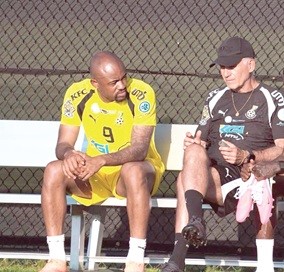
As Ghana prepare for their crucial Group L encounter against England on Tuesday, Black Stars head coach Carlos Queiroz finds himself confronted with perhaps the most difficult selection decision of his tenure.
The experienced Portuguese manager has spent decades handling elite footballers and managing some of the biggest national teams and clubs in the world. Yet the question dominating Ghana’s camp ahead of the England clash concerns one of the country’s most experienced players: should captain Jordan Ayew retain his place in the starting lineup?
The debate intensified following Ghana’s opening victory over Panama, a match that exposed concerns about Ayew’s recent performances while simultaneously strengthening the claims of two younger attackers.
Ayew led the line against Panama and remained on the pitch for 87 minutes. However, his influence on the game proved limited. The veteran forward struggled to create meaningful opportunities, rarely threatened the opposition defence, and found little success in attacking situations.
His performance became a major talking point after Ghana’s attacking display changed dramatically following his substitution. The introduction of Brandon Thomas-Asante and Abdul Fatawu Issahaku injected pace, urgency and directness into Ghana’s attack.
Thomas-Asante’s aggressive running and physical presence unsettled Panama’s defenders, while Fatawu’s pace and willingness to attack defenders opened spaces that had previously been unavailable. Their impact eventually helped Ghana secure victory and shifted attention toward possible changes for the England fixture.
Against an England side known for its aggressive pressing and attacking intensity, many observers believe Ghana may require greater mobility and energy in the front line. A more dynamic attacking approach could prove essential against a team capable of controlling possession and exploiting defensive weaknesses.
Nevertheless, the case for Ayew remains compelling.
The Black Stars captain played a significant role during Ghana’s World Cup qualification campaign, contributing seven goals and seven assists. His experience at international level, leadership qualities and understanding of high-pressure situations continue to make him one of the squad’s most influential figures.
Beyond statistics, Ayew offers qualities that are difficult to measure. His ability to organise teammates, communicate during difficult moments and guide younger players has made him a central figure within the national team for several years.
For a squad facing one of the tournament favourites, such experience could prove invaluable.
However, the performances of Fatawu Issahaku and Brandon Thomas-Asante have created genuine competition for starting positions.
Fatawu’s direct running and pressing provided Ghana with a different attacking dimension against Panama. His pace could pose problems for England’s advancing full-backs and create opportunities on the counterattack.
Thomas-Asante also impressed with his strength, movement and ability to hold up play. His contribution to Ghana’s winning goal highlighted his effectiveness under pressure and strengthened his case for a starting role.
As Ghana enter a match that could significantly shape their World Cup campaign, Queiroz must balance experience against current form.


The coach now faces a choice between maintaining faith in his captain or rewarding players whose performances have demanded greater responsibility.
Many believe the most practical solution may involve starting Fatawu Issahaku, Brandon Thomas-Asante and Antoine Semenyo in attack while keeping Ayew available from the bench to provide leadership and experience later in the game.
Whatever decision Queiroz ultimately makes, it is likely to define not only Ghana’s approach against England but also one of the most closely watched selection calls of the Black Stars’ World Cup campaign.
For Ghana, the question is no longer simply whether Jordan Ayew remains an important player. It is whether, at this moment and against an opponent of England’s quality, he might have a greater impact coming off the bench than starting.