







Ghana will now be able to access and use the airspace of partner countries, including Benin, without the need for repeated bilateral negotiations, following the ratification of new Bilateral Air Services Agreements (BASAs) by Parliament.
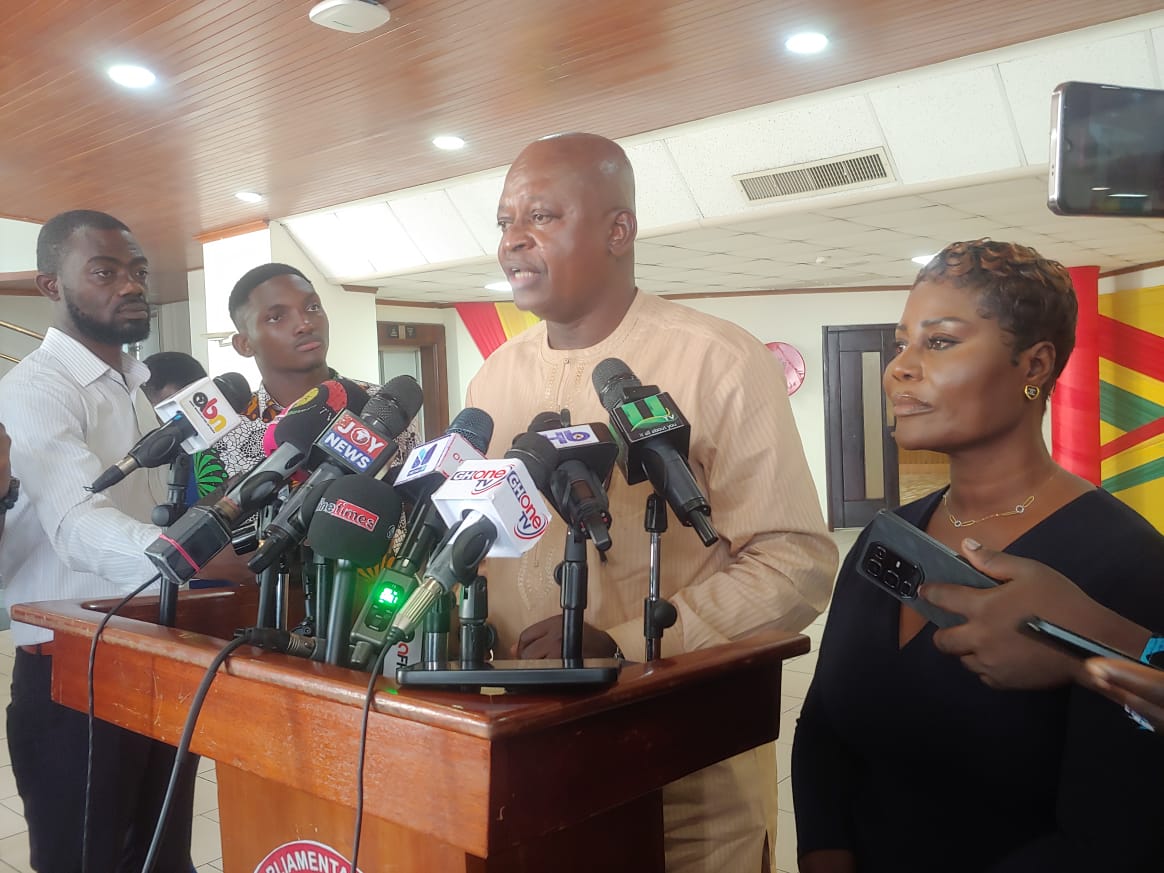
The Minister of Transport, Hon. Joseph Bukari Nikpe, speaking to journalists, said the agreements mark a significant shift in Ghana’s aviation cooperation framework, allowing smoother and more efficient use of foreign airspace under established treaties.
Explaining the practical implication of the ratification, he said Ghana can now operate under simplified notification procedures instead of seeking fresh permissions for each flight arrangement.
“This will now allow us to use the various airspace of the countries that are signing agreements. For instance, we and Benin, that was the first one we ratified. We can now have an agreement that allows us to use their airspace without any trouble.


“You know you have to have an agreement with the connected country before you can use their airspace. And even if you’re flying over a country, you need permission. But if you have these treaties or conventions ratified by Parliament, you can just notify that you are using the airspace, and you don’t need to go for any further agreement.”
He added that the agreements go beyond airspace access to include broader aviation cooperation such as training, aeronautical services, and the promotion of business and free movement among partner states.
“So basically, the agreements that we have ratified will give Ghana the freedom to be able to access and use the various airspace or airports of the countries that are part of these agreements,” he stated.
Parliament has approved Bilateral Air Services Agreements between Ghana and six countries—Benin, Saudi Arabia, Mauritius, Guyana, Luxembourg, and Qatar—as part of efforts to strengthen international air transport cooperation and improve global connectivity.
The agreements establish a regulatory framework governing air services between Ghana and partner states, ensuring fair operating conditions for designated airlines while maintaining each country’s sovereign control over its airspace.
They also provide mechanisms for dispute resolution, compliance with domestic aviation laws, and safeguards to ensure the financial sustainability of international air transport operations.
Government says the initiative is expected to boost trade, tourism, investment, and business ties by improving passenger and cargo movement between Ghana and the partner countries.
Contributing to the debate on the floor of Parliament on July 1, the Member of Parliament for Takoradi, Kwabena Okyere Darko-Mensah, urged Ghana to draw lessons from countries such as Mauritius in using aviation to enhance tourism.
“Mauritius, for instance, has smaller planes that can do short distances to tourism sites. We don’t seem to have them in Ghana. If we have them, a lot of the hard-to-reach areas in Ghana can be reached to boost tourism in this country,” he said.
The ratification forms part of Ghana’s broader strategy to expand its aviation network, strengthen bilateral relations, and position the country as a regional aviation hub in West Africa.