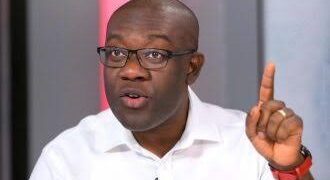







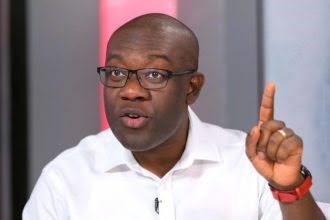
Member of Parliament for Ofoase-Ayirebi and Ranking Member on Parliament’s Economy and Development Committee, Kojo Oppong Nkrumah, has warned that attempts by governments to suppress dissenting voices through arrests and prosecutions could be the beginning of tyranny.
According to him, using legal action to “sanitise” public discourse and silence critics is a dangerous path that undermines freedom of speech and democratic accountability.
Speaking on ABC in the Morning on Thursday, July 23, 2026, Mr Oppong Nkrumah questioned claims that freedom of speech had returned under the current administration, arguing that recent developments suggest otherwise.


“Ask those who you used to make that argument that freedom of speech is back, whether what is going on now is freedom of speech which has returned,” he said.
“It is now rather that you don’t have the freedom to say what you want to say,” he added.
The former Information Minister said governments must tolerate criticism from citizens, especially when they occupy public office, as people will naturally express their views and frustrations.
He cautioned against what he described as efforts to sanitise the public space by targeting individuals over their comments.
“This is how tyranny starts,” Mr Oppong Nkrumah warned.
“This is how tyrants behave; that they have to sanitise the place because they feel someone’s voice against them, someone’s view against them,” he added.
He recounted an incident where he was openly insulted by a passerby while driving through Asamankese, saying such experiences come with holding public office.
“There was a day I was driving around Asamankese, we got into a traffic, we slowed down, somebody just walking by the road said thieves, all sitting in V8s, thieves. I don’t know, he doesn’t know me, I haven’t done anything to him, just yelling insults at me,” he said.
“But that is the cost of being in public office. People will have perceptions that they will express about you,” he added.
Mr Oppong Nkrumah argued that politicians must develop the capacity to endure criticism rather than resort to criminal prosecutions against citizens who express unfavourable opinions.
His comments come amid public debate over the prosecution and sentencing of individuals accused of making offensive or false claims about political figures, with critics raising concerns about the balance between protecting reputations and preserving free expression.