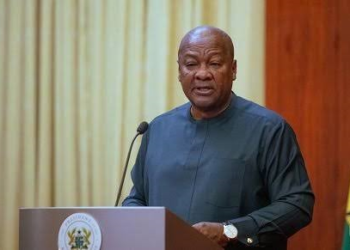








Deputy Minister for Health and Member of Parliament for Essikado-Ketan, Prof. Dr. Grace Ayensu-Danquah, has raised concerns about the challenges uninsured government vehicles, ambulances and patients pose to emergency healthcare delivery in Ghana.
Contributing to a statement on the floor of Parliament concerning the exemption of state-owned vehicles from compulsory third-party insurance, the Deputy Minister drew attention to the difficulties healthcare facilities encounter when accident victims require urgent treatment but lack the financial means or insurance coverage to support their care.
She explained that accidents involving uninsured ambulances and patients without insurance could create further complications at hospitals, potentially delaying medical interventions at a time when every minute matters.
“Imagine a scenario where an ambulance picks up a patient who is not insured, the ambulance is not insured, the people in the ambulance are not insured, and that ambulance gets an accident. When they arrive at the hospital, it leads to a lot of delays,” she stated.
Prof. Ayensu-Danquah further highlighted the significance of the Golden Hour of Injury, a critical 60-minute period following a traumatic injury during which timely medical intervention can significantly influence a patient’s chances of survival.
She cautioned that delays in making essential medical decisions and providing treatment within this period could have fatal consequences.
“We have something called the golden hour of injury, and that golden hour is the moment of injury to the first sixty minutes. Decisions we make within that golden hour determine whether the person lives or dies,” she said.
The Deputy Minister also pointed out that the challenges do not necessarily end once accident victims have been stabilised, as a lack of funds for subsequent procedures can further jeopardise their recovery.
She identified CT scans, Intensive Care Unit (ICU) admission, orthopaedic operations for fractures and specialised neurosurgical procedures for head injuries as some of the interventions that may be delayed when patients are unable to meet the associated costs.
According to her, postponing such procedures could turn otherwise treatable injuries into permanent disabilities, with affected individuals potentially facing long-term medical complications.
She added that families of accident victims are often left under considerable emotional and financial pressure as they struggle to raise money for urgent treatment while their relatives remain in critical condition.


Hospitals, she noted, also bear the financial consequences of treating patients who cannot settle their medical bills, placing additional strain on healthcare facilities and diverting resources that could have been used to provide other essential services.
Prof. Ayensu-Danquah expressed support for the statement presented by the Minority Chief Whip, Frank Annoh-Dompreh, and urged Parliament to treat the matter with urgency, given its implications for emergency healthcare delivery.
“I stand strongly behind this statement, and I believe that something ought to be done. The reality, Mr. Speaker, is that we don’t have a lot of time, and this issue is an emergency,” she emphasised.
Her contribution brings attention to the intersection between vehicle insurance and emergency healthcare financing, particularly the need to ensure that ambulances and other state-owned vehicles have adequate insurance protection to prevent financial and administrative complications from obstructing urgent medical care.