






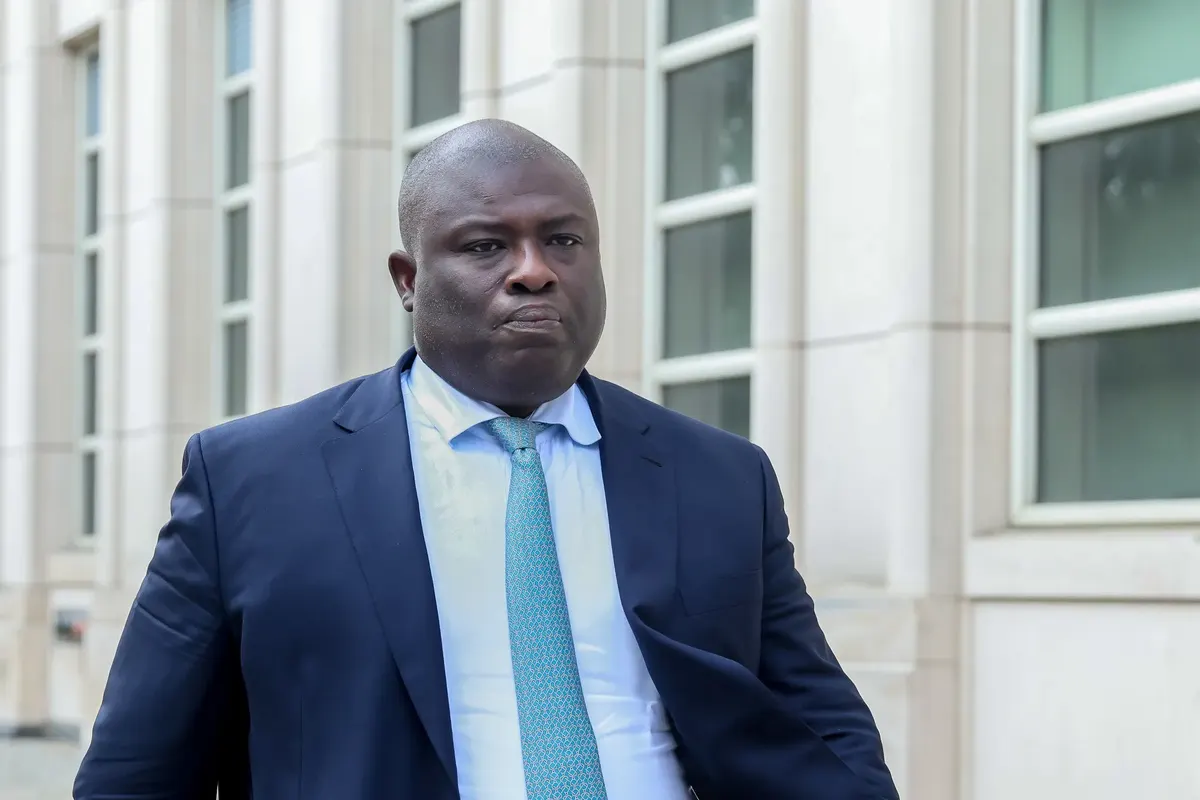
The conviction of Ghanaian investment banker Asante Kwaku Berko in the United States over a bribery scheme linked to a Turkish power project has brought renewed attention to a network of individuals, companies and government officials connected to the transaction.
The case could have further implications in Ghana, with the Attorney General’s Office confirming that it is collaborating with US authorities on the matter.
The Office of the Special Prosecutor (OSP) has also disclosed that it worked with the US Department of Justice in securing the conviction.
Berko was convicted on three counts: conspiracy to violate the US Foreign Corrupt Practices Act (FCPA), violation of the FCPA and conspiracy to commit money laundering.
At the heart of the case was an attempt to secure an Emergency Power Agreement (EPA) between the Government of Ghana and a Turkish energy company seeking to establish a power plant in Ghana.
The US prosecution alleged that more than US$1 million in bribes was channelled to Ghanaian government officials through intermediaries in an effort to influence decisions on the project.
Here are the key individuals and institutions at the centre of the case.
Asante Kwaku Berko
Asante Kwaku Berko was a senior executive at Goldman Sachs, the US financial institution involved in the transaction.
He was responsible for working on the proposed power project and acted in connection with the financial institution’s advisory and financing role for the Turkish energy company.
According to the prosecution, Berko used his position and relationships to facilitate payments to Ghanaian officials as part of efforts to secure the Emergency Power Agreement.
He subsequently returned to Ghana and served as Managing Director of Tema Oil Refinery.
Berko was convicted in the United States on three counts arising from the alleged scheme.
Goldman Sachs
Goldman Sachs was the US financial institution at the centre of the financing arrangements for the Turkish power project.
The institution advised the Turkish energy company and was involved in financing the proposed project.
Under the transaction, Goldman Sachs was expected to provide a US$190 million loan to the Turkish energy company, as well as a US$75 million letter of credit to the Republic of Ghana, which was required for the completion of the deal.
The institution also held an approximately 16% stake in the Turkish energy company and was expected to earn more than US$11.3 million in fees from the transaction.
Its financial interest in the project therefore extended beyond its role as an adviser.
The Turkish holding company and energy company
The Turkish holding company was the parent entity within the corporate structure behind the power project.
Its subsidiary, referred to in the case as the Turkish Energy Company, was seeking to establish the power plant and obtain an Emergency Power Agreement from the Government of Ghana.
The Turkish energy company was a client of Goldman Sachs.
US prosecutors alleged that money from the Turkish company was transferred through Ghanaian consulting firms and was ultimately used to facilitate payments to Ghanaian officials.
Two senior Turkish nationals associated with the energy company were also identified as co-conspirators in the case.
The Ghanaian consulting companies
Two Ghanaian consulting companies featured prominently in the alleged movement of funds.
Ghana Consulting Company 1 was allegedly used to receive money from the Turkish energy company for purposes connected to the payment of bribes.
A director of the company was identified in the case as Co-Conspirator 1.
Ghana Consulting Company 2 was also allegedly used in the arrangement. According to the prosecution, it was used to seek reimbursement from the Turkish energy company for bribes allegedly paid by Berko and his co-conspirators.
The company also invoiced the Turkish energy company for payments due to Ghana Consulting Company 1.
Its principal was identified as Co-Conspirator 4.
The four unnamed co-conspirators
The US case identifies four other individuals as co-conspirators, although their identities were not publicly disclosed in the case materials.
Co-Conspirator 1 was a director of Ghana Consulting Company 1 and was involved in the company allegedly used to receive funds from the Turkish energy company.
Co-Conspirator 2 was a high-ranking officer of the Turkish energy company and a Turkish national.
Co-Conspirator 3 was also a Turkish national and a senior officer of the Turkish energy company.
Co-Conspirator 4 was the principal of both Ghana Consulting Company 1 and Ghana Consulting Company 2.
Their alleged roles centred on the movement of funds and efforts to facilitate payments connected to the power project.


The Ghanaian government officials
Two Ghanaian officials are also identified in the US case, although neither is publicly named in the materials.
They are referred to as Ghana Official 1 and Ghana Official 2.
Ghana Official 1 was an adviser to a senior figure at the Ministry of Power and was allegedly targeted with payments intended to influence decisions concerning the project.
Ghana Official 2 was a high-ranking official at the Ministry of Power.
The officials were significant to the transaction because of the ministry’s role in the government’s consideration of the proposed power project.
The prosecution alleged that payments were intended to influence government decisions necessary for the Turkish energy company to secure the Emergency Power Agreement.
The Senior Ghana Official
Another unnamed figure in the case is the Senior Ghana Official, described as a high-ranking official connected to the Ministry of Power.
The person was the superior of Ghana Official 1 and was considered influential in the approval process for the power project.
The Senior Ghana Official was also a signatory to the Emergency Power Agreement.
The individual’s identity has not been disclosed in the case materials referenced.
What was the alleged scheme about?
The case revolved around efforts to secure an Emergency Power Agreement between the Government of Ghana and the Turkish energy company.
The proposed agreement was critical to the Turkish company’s plans to establish and operate its power plant in Ghana.
For Goldman Sachs, the transaction also represented a significant commercial opportunity, given its role in financing the project, its equity interest in the Turkish company and the fees it expected to receive.
US prosecutors alleged that Berko and his co-conspirators sought to influence Ghanaian government officials by arranging more than US$1 million in bribe payments.
The alleged payments were facilitated through Ghanaian consulting companies and involved funds originating from the Turkish energy company.
The case ultimately led to Berko’s conviction in the United States on charges relating to the FCPA and money laundering.
What happens next in Ghana?
The conviction has also raised questions about whether individuals or institutions connected to the alleged scheme could face proceedings in Ghana.
The Attorney General’s Office has said it is working with US authorities on the matter, while the Office of the Special Prosecutor has confirmed its collaboration with the US Department of Justice.
That cooperation could determine whether the evidence and information generated from the US prosecution lead to further investigations or criminal proceedings in Ghana.
For now, the US conviction has placed renewed focus on the network surrounding the proposed Turkish power project — from Berko and the international financial institutions involved to the Turkish energy interests, Ghanaian consulting companies and unnamed government officials.