






Finance Minister Dr. Cassiel Ato Forson has declared that Ghana’s economy has moved “from the Intensive Care Unit (ICU) to the Wellness Centre,” describing the development as a major sign of recovery from the country’s recent economic difficulties.
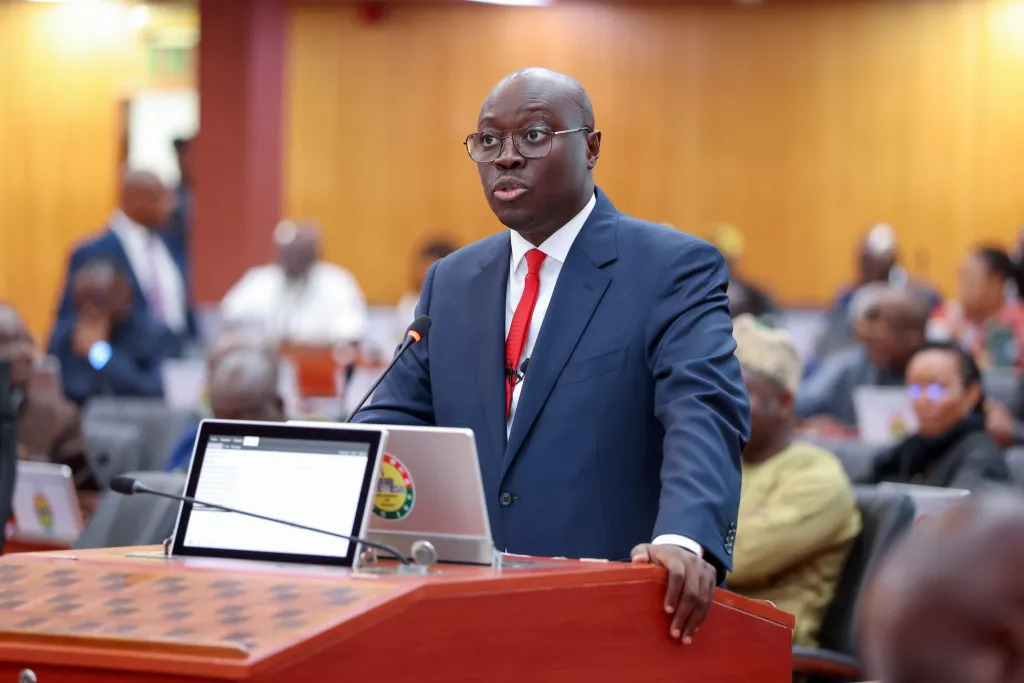
Addressing Parliament on Thursday, May 28, Dr. Forson said Ghana is making significant progress in restoring macroeconomic stability and debt sustainability ahead of schedule, adding that the country is gradually shifting away from dependence on financial bailouts toward a more stable reform-driven economy.
“For Ghana, this marks an important shift from seeking financial bailout to engaging as a credible reform partner while continuing to benefit from policy discipline, external validation and strengthened investor confidence,” he stated.
According to the Finance Minister, government’s next phase of economic management will be anchored on a Policy Coordination Instrument (PCI) arrangement with the International Monetary Fund (IMF), which he said would help sustain fiscal reforms and reinforce investor confidence.
“The PCI will enable us to continue leveraging the IMF’s regular policy assessment and expertise as a signal to investors, thereby certifying the credibility of our stewardship and further strengthening our credit rating,” Dr. Forson explained.
He noted that recent gains in the economy have been driven by tighter fiscal discipline and coordinated policy interventions aimed at stabilising key indicators, including inflation, exchange rate pressures, debt management and revenue mobilisation.
The Minister’s remarks come as government intensifies efforts to consolidate recent economic gains while rebuilding long-term investor confidence and strengthening resilience against external shocks.
Meanwhile, the IMF has confirmed that its engagement with Ghana is now evolving beyond the current Extended Credit Facility (ECF) programme toward a reform-focused Policy Coordination Instrument.


According to the Fund, ongoing discussions combine Ghana’s 2026 Article IV consultation, the final review under the ECF programme and negotiations for a new 36-month non-financing PCI arrangement.
The IMF said the proposed framework would focus on maintaining a credible fiscal path, improving economic resilience and accelerating structural reforms.
It also acknowledged improvements in Ghana’s debt outlook, noting that recent progress has created some fiscal space to support development priorities while protecting macroeconomic stability gains already achieved.
However, the Fund cautioned that sustaining the progress would depend heavily on the successful implementation of ambitious public financial management reforms and measures to reduce risks associated with contingent liabilities.
Amid ongoing global economic uncertainties and fiscal risks linked to state-owned enterprises and quasi-fiscal operations, the IMF indicated that the PCI agenda would prioritise stronger safeguards, transparency and accountability measures.
According to the Fund, these reforms are intended to strengthen policy credibility, rebuild fiscal buffers and create room for critical investments and development spending.