






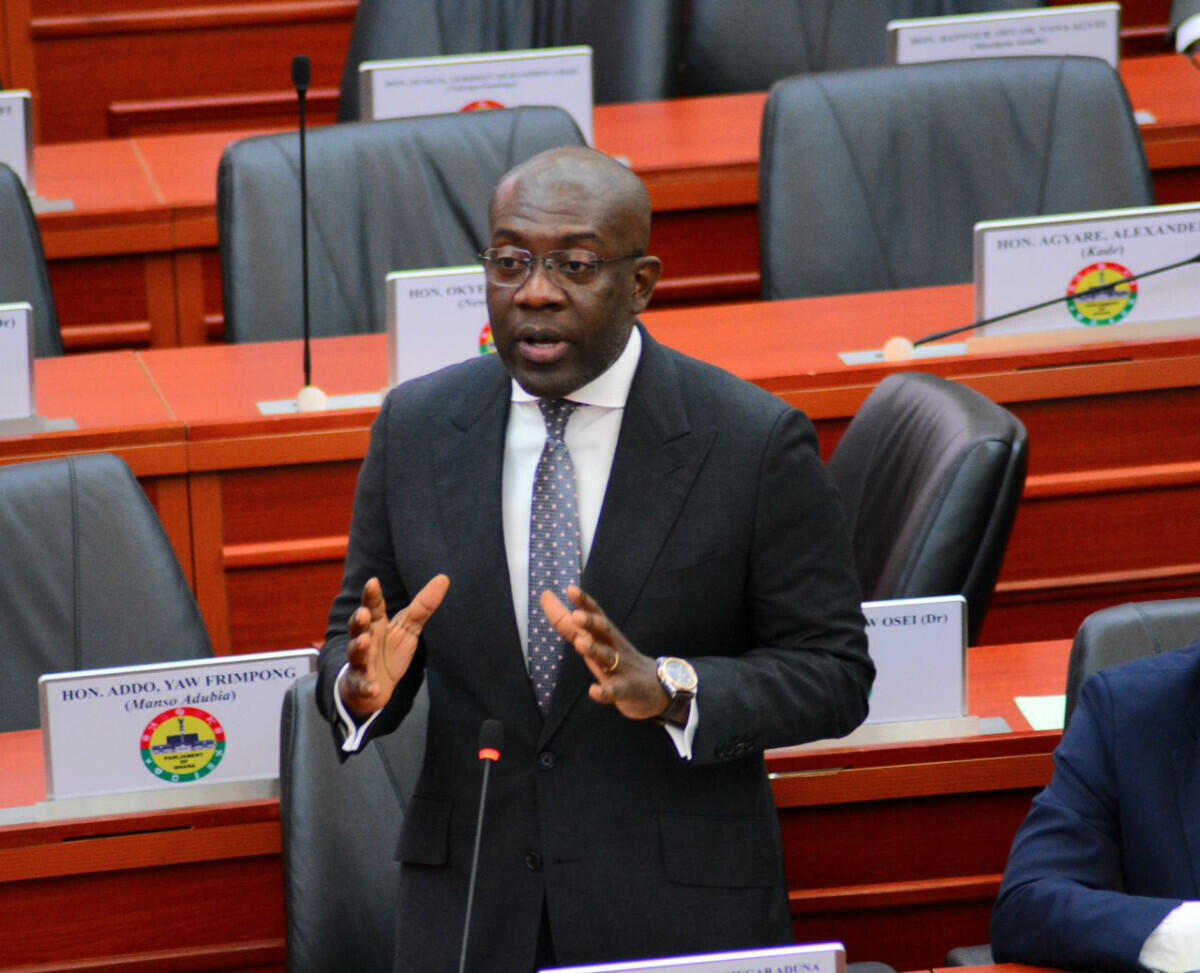
The Ranking Member on Parliament’s Economy and Development Committee and Member of Parliament for Ofoase-Ayirebi, Kojo Oppong Nkrumah, has strongly criticized the Mahama administration for its handling of recurring flood disasters, arguing that the government cannot justify the loss of lives by pointing to fiscal discipline and expenditure controls.
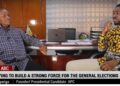
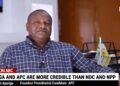
Speaking on Accra based JoyNews in response to recent flooding that has claimed at least 37 lives and displaced thousands of residents across parts of the country, Mr. Oppong Nkrumah said the government’s explanation that it withheld spending to stabilize the economy was unacceptable, insisting that no level of fiscal consolidation can compensate for lives lost.
His comments come in the wake of renewed public debate over Ghana’s flood management system after severe rains left several communities submerged, destroyed homes and businesses, and claimed dozens of lives.
The disaster has also reignited concerns over delays in implementing flood-control projects despite repeated warnings from experts, development partners, and previous governments that the country requires sustained investment in drainage infrastructure and climate resilience.
According to Mr. Oppong Nkrumah, the Minority has never opposed the demolition of structures built on waterways and therefore rejected attempts to suggest otherwise.
He argued that government officials should avoid creating what he described as false narratives instead of addressing the substantive issues surrounding the country’s flood response.
He took particular exception to comments made by government representatives, accusing them of blaming institutions such as the Ghana Meteorological Agency, the National Disaster Management Organisation (NADMO), and ordinary citizens while refusing to accept responsibility for policy decisions that contributed to the worsening situation.
Mr. Oppong Nkrumah maintained that one of the major concerns raised by the World Bank was the withholding of funding for critical flood control programmes, insisting that government should acknowledge this issue rather than shift blame to other stakeholders.


He questioned the argument that strict expenditure controls were necessary to achieve macroeconomic stability, describing it as insensitive in light of the human cost of the floods.
“It is a very sad argument,” he said, stressing that for the 37 people who lost their lives, no amount of economic stability or improved fiscal indicators would restore them to their families.
The former Minister for Works and Housing argued that even while pursuing fiscal discipline, government should have distinguished between ordinary expenditure and critical life-saving investments.
He explained that several flood control projects are financed through development partners rather than directly from the national budget, meaning government simply needed to facilitate timely approvals and disbursements rather than delay implementation.
According to him, many donor-funded projects require only administrative approvals before contractors can be paid and works executed, making it difficult to justify delays solely based on expenditure control.
He further argued that the consequences of delayed funding extend beyond fatalities, noting that thousands of Ghanaians have lost homes, businesses and livelihoods because essential flood prevention projects were not completed on time.
Mr. Oppong Nkrumah urged the government to stop defending its actions and instead accept responsibility where necessary while taking urgent steps to ensure critical flood control projects are exempted from bureaucratic delays and funding bottlenecks.
Commenting on government’s announcement of a GH¢300 million allocation for flood-related interventions, the former minister cautioned that parliamentary approval alone would not solve the problem.
Drawing from his experience in government, he explained that many projects fail not because Parliament refuses funding but because approved funds are released too slowly, preventing ministries and implementing agencies from carrying out planned works.
“I’ve been a minister,” he said. “Even when Parliament approves the money, if the speed of disbursement does not change, the funds will remain stuck and the intended projects will not be executed.
To illustrate his point, he referenced the tragic accident at El-Wak in which several people died. He recalled that government at the time announced plans to significantly increase recruitment into the security services following the incident but argued that the promised action never materialized.
He cautioned against what he described as a pattern of making public announcements after national tragedies without ensuring that promised interventions are fully implemented.
Mr. Oppong Nkrumah therefore backed the Minority Caucus’ position that Parliament must continuously monitor the disbursement and utilisation of the newly approved GH¢300 million to ensure the funds are released promptly and used for their intended purpose.
He also accused government of politicising the flood management programmes, particularly the World Bank-supported Greater Accra Resilient and Integrated Development (GARID) Programme.
According to him, government officials previously created the impression that funds under the programme had been mismanaged or lost.
However, he noted that government representatives have now admitted the programme remains fully funded and that discussions with the World Bank are focused primarily on improving the speed of disbursement.
Mr. Oppong Nkrumah argued that this admission contradicts earlier political narratives and called on government to apologise for politicising what he described as an important national development programme.
He also defended former Vice President Dr. Mahamudu Bawumia against accusations of politicising the disaster, stating that Dr. Bawumia has instead appealed for unity and encouraged Ghanaians to support flood victims irrespective of political affiliation.
According to him, Dr. Bawumia has already fulfilled his pledge by donating relief items to affected communities and continues to encourage individuals, organisations and institutions to assist victims.
Mr. Oppong Nkrumah further criticised government’s earlier decision to centralise funds from ministries, departments and agencies into the Single Treasury Account, arguing that the move disrupted project implementation by depriving agencies of resources that had already been allocated for ongoing work.
He contended that after withdrawing those funds, government later had to initiate processes to return money to the same agencies, resulting in unnecessary delays in executing critical projects.
Looking ahead, the Ofoase-Ayirebi legislator warned that meteorological forecasts indicate more rainfall in the coming weeks, making it imperative for government to move beyond public relations and political exchanges.
He called on all stakeholders to unite behind practical solutions, accelerate project execution and focus on protecting lives and livelihoods.
“Now is not the time for partisan politics,” Mr. Oppong Nkrumah stated. “Now is the time to roll up our sleeves, get our boots dirty, get on the ground and work together to save more lives and livelihoods.”