






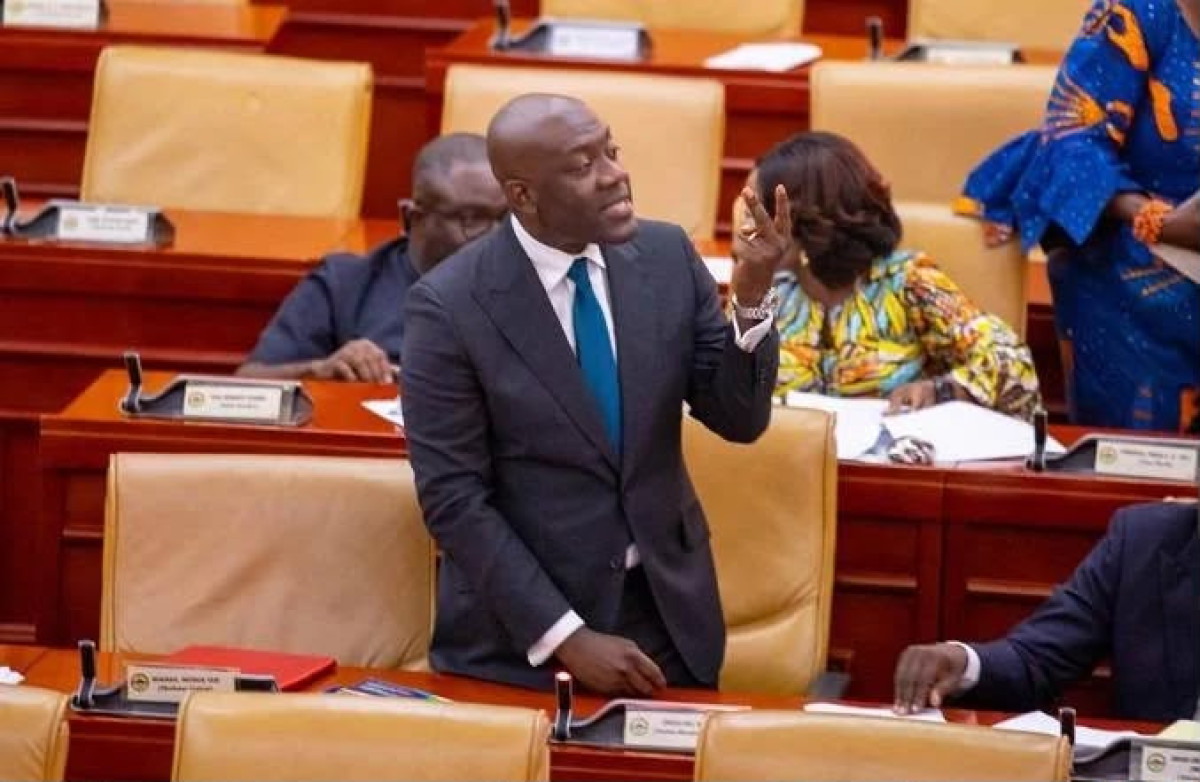
Ranking Member on Parliament’s Economy and Development Committee, Kojo Oppong Nkrumah, has accused the Majority of shielding Ghanaians from key revelations he says prove the impact of the previous government’s gold policy on the cedi’s stability.
The member of parliament for Ofoase-Ayirebi, made the claim after the Bank of Ghana Governor, Dr Johnson Asiama, appeared before Parliament’s Committee of the Whole to answer questions on foreign exchange operations and the factors influencing the local currency’s performance.
The sitting was held behind closed doors after the Majority successfully moved for the session to be conducted in camera, leading to journalists being asked to leave the public gallery.
The decision triggered protests from the Minority, who argued that the issues under discussion were matters of national interest and should have been made available for public scrutiny.
Mr Oppong Nkrumah, who led the Minority’s objection, said there was no justification for restricting media access since the Governor’s written responses had already been submitted to Parliament and contained no sensitive information.


“These are the answers that the Majority seeks to deny the press an opportunity to report to the people of Ghana. What is there to hide, for which reason the media is being denied access to follow these proceedings?” he questioned.
The Ofoase-Ayirebi MP had filed questions seeking details on the source of foreign exchange used by the central bank for market interventions, the framework guiding those interventions and the amount of foreign exchange provided since January 7, 2025.
In his response, Dr Asiama disclosed that the Bank of Ghana had not used Ghana’s international reserves for direct foreign exchange interventions since August 2024.
Instead, he explained that the central bank had relied on the Domestic Gold Purchase Programme to support foreign exchange flows into the market.
According to the Governor, the arrangement involves converting cedi proceeds from foreign exchange forward auctions into foreign currency through gold purchases before the funds are introduced into the market.
He further stated that the programme replaced foreign exchange flows previously provided by independent gold exporters, which were later centralised under GoldBod operations.
Dr Asiama also revealed that the Bank facilitated approximately US$10.36 billion in foreign exchange through the Domestic Gold Purchase Programme between January 7 and December 31, 2025.
He stressed that the transactions were not funded from Ghana’s international reserves but rather from foreign exchange generated through gold purchases.
Reacting to the disclosure, Mr Oppong Nkrumah argued that the responses showed the gold programme had become the main source of foreign exchange support for the cedi.
“The Bank of Ghana is here to admit that its ability to intervene on the market is as a result of the Domestic Gold Purchase Programme. Why is it that the Majority is preventing the Governor from saying this to the entire country?” he said.
The former Information Minister added that the Minority had intended to question the Governor on the Bank of Ghana’s audited financial statements, including concerns surrounding its reported operating losses, but suspended its participation after the media was excluded from the proceedings.
He maintained that Parliament, as the “people’s House”, must ensure that discussions involving the national economy remain open and transparent.
However, the Majority defended the decision to hold the session privately, arguing that it was consistent with Parliament’s Standing Orders.
Majority Leader Mahama Ayariga said committees had the authority to determine whether proceedings should be held publicly or privately and rejected claims that the Governor was being shielded from scrutiny.
He explained that Dr Asiama was ready to respond to questions from lawmakers but the Minority chose to walk out after its request for an open sitting was rejected.
The Minority, however, insists that Ghanaians should have been given the opportunity to hear directly from the central bank on the management of foreign exchange and the factors behind the cedi’s recent performance.