

• Latest
  • Trending
  • All
  • News
  • Business
  • Politics
  • World
Cocoa Prices are Surging: West African countries should seize the moment to negotiate a better deal for farmers

Cocoa Prices are Surging: West African countries should seize the moment to negotiate a better deal for farmers

5 October 2023
PFAG Raises Concerns Over Low Funding for Agriculture in 2027 Budget

Don’t Just Announce Agriculture Policies, Fund Them – PFAG Tells Gov’t

27 November 2026
PFAG Raises Concerns Over Low Funding for Agriculture in 2027 Budget

PFAG Raises Concerns Over Low Funding for Agriculture in 2027 Budget

26 November 2026
Anthony Nukpenu Unveils Bold Vision for NDC Ahead of 2026 National Executive Elections in Tema

Anthony Nukpenu Unveils Bold Vision for NDC Ahead of 2026 National Executive Elections in Tema

18 November 2026
One Dead, Tanker Driver Critically Injured in Amamprobi Junction Fire

One Dead, Tanker Driver Critically Injured in Amamprobi Junction Fire

17 November 2026
Ghana’s King Ayisoba Makes Grammy Debut Alongside Five-Time Nominee Rocky Dawuni

Ghana’s King Ayisoba Makes Grammy Debut Alongside Five-Time Nominee Rocky Dawuni

17 November 2026
Mahama Calls for People-Centred Digital Transformation to Drive West Africa’s Development

Mahama Calls for People-Centred Digital Transformation to Drive West Africa’s Development

17 November 2026
Koans Building Solutions Defends Land Ownership, Challenges Chiefs to Seek Court Interpretation

Koans Building Solutions Defends Land Ownership, Challenges Chiefs to Seek Court Interpretation

17 November 2026
Ejisu MCE Commissions Six-Unit Classroom Block, Announces Further School Expansion

Ejisu MCE Commissions Six-Unit Classroom Block, Announces Further School Expansion

17 November 2026
Martyrs of Uganda School Marks 50 Years, Cuts Sod for Archbishop Kwesi Sarpong Complex

Martyrs of Uganda School Marks 50 Years, Cuts Sod for Archbishop Kwesi Sarpong Complex

17 November 2026
Gov’t to Begin Nationwide Billboard Crackdown on Nov. 14

Gov’t to Begin Nationwide Billboard Crackdown on Nov. 14

14 November 2026
Minority Accuses Mahama Govt of Rebranding Failed 24-Hour Economy as New Economy

Minority Accuses Mahama Govt of Rebranding Failed 24-Hour Economy as New Economy

13 November 2026
Boateng Ameyaw to Host Fifth DEN Africa Summit in Kumasi, Unveil Debut Book

Boateng Ameyaw to Host Fifth DEN Africa Summit in Kumasi, Unveil Debut Book

13 November 2026
ADVERTISEMENT
  • Advertise
Friday, November 27, 2026
abcnewsgh
  • Home
  • News
  • Politics
  • Business
  • Sports
No Result
View All Result
abcnewsgh
No Result
View All Result
Home Business

Cocoa Prices are Surging: West African countries should seize the moment to negotiate a better deal for farmers

by Newsroom
5 October 2023
in Business
0
Cocoa Prices are Surging: West African countries should seize the moment to negotiate a better deal for farmers
19
VIEWS
ShareTweetSendSend

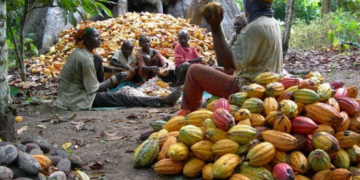
The global price of cocoa is spiking, a direct response to dwindling cocoa output in west Africa. In September, cocoa futures reached a 44-year price peak due to mounting concerns over reduced supplies from the region.

The price surge could prove to be a critical moment for cocoa farming and policy in west Africa.

The cocoa-producing belt of west Africa is responsible for generating over 80% of the total global output. Between them, Ghana and Côte d’Ivoire contribute more than 60% to the global output. Ghana is the second-biggest producer in the world and cocoa is a vital component of the country’s economy.

The global price spike has led west African governments to increase the guaranteed producer prices to farmers. Ghana recently raised the state-guaranteed cocoa price paid to farmers by two thirds. The announcement means that Ghana’s cocoa farmers will be paid 20,943 cedis (US$1,837) per tonne for the upcoming 2023-2024 season, up from 12,800 cedis.

Cameroon, the world’s fourth-largest cocoa producer, raised the price cocoa farmers get to 1,500 CFA francs (US$2.50) per kilogram, a 25% jump from the previous rate of 1,200 CFA francs. This increase is even more significant than Ghana’s when factoring in Cameroon’s single-digit inflation. Additionally, the Cote d’Ivoire government has announced a rise in the producer price.

As an economics researcher who has extensively studied and written about cocoa production in west Africa, I contend that the recent shortages can be harnessed to strengthen the position of cocoa producers. This will enable them to address the structural challenges ingrained in the cocoa production value chain. Rising production costs have not been recognised in the value of cocoa beans. Farmers therefore haven’t been able to earn enough income and this has led to unsustainable farming practices.

In my view, west African countries should use the cocoa shortage as negotiating leverage against multinational corporations to address these structural issues. Both Ghana and Côte d’Ivoire must recognise this pivotal moment. They must take the lead, and frame the current production challenges as deep-seated structural problems requiring solutions, rather than as short-term issues.

What’s driving the change?

Ghana’s cocoa regulator recently indicated that its farmers might not be able to meet some cocoa contract obligations for another season. Ghana’s projected cocoa yield for the 2022/23 planting season was the lowest in 13 years, falling 24% short of the initial estimates of 850,000 metric tonnes.

This trend has been repeated across the region, with production falling in Côte d’Ivoire and Cameroon.

Reduced output means demand can’t be met and global prices rise.

The reduction in cocoa output is attributed to short-term and long-term factors.

Commentators typically emphasise the short-term factors:

  • poor weather conditions
  • black pod disease, which causes cocoa pods to rot
  • the decline in the number of cocoa farmers, some of them selling their land to illegal miners
  • a shortage of fertilisers and pesticides, especially since the conflict in Ukraine has curtailed Russia’s export of potash and other fertilisers.

A number of long-term structural issues have beset cocoa farming in west Africa for decades. They shouldn’t be overshadowed by concerns with short-term problems.

The first is the declining availability of forest land and its connection to increasing production costs.

Over the last two decades, depletion of forest land has led farmers to turn to grasslands for replanting cocoa plants. This requires extensive land preparation, regular weeding around the cocoa trees, pruning, and the application of fertilisers and pesticides. What’s more, the plants are highly susceptible to disease. All these things result in increased labour costs.

None of these additional burdens have been incorporated into the pricing for sustainable cocoa production. In light of the new cost structure, cocoa beans have been undervalued for decades. Farmers have become poorer and are exploring alternative sources of livelihood.

The cost of sustainably cultivating cocoa in grasslands must be reflected in the price that farmers receive. Relying solely on market forces will not achieve this. For instance, every year, typically in September, the Ghana Cocoa Board announces the official producer price for cocoa beans for the upcoming cocoa season on behalf of the government. This official price is based on the anticipated export market price, with an understanding in Ghana that farmers should receive approximately 70% of it. However, the resulting market price, and consequently the producer price derived from it, often falls short of covering the costs of sustainable cocoa cultivation.

A path forward

What would it cost for cocoa farmers to cultivate cocoa beans sustainably, and ensure a living income, without contributing to deforestation or resorting to child labour?

If the market price falls below this cost (which isn’t static), then the farmers face exploitation, giving rise to many of the problems that plague the industry.

A few years ago, Ghana and Côte d’Ivoire pioneered the introduction of the “living income differential” – a premium that cocoa buyers would pay on top of the market price to ensure that farmers earned a sustainable income from their produce. Despite its noble intent, the initiative faltered. It was not well thought through. And it came at a time when these countries had diminished bargaining clout in a saturated market. Now is a favourable moment.

The crisis in the sector puts cocoa producers in a stronger negotiating position.

Ghana and Côte d’Ivoire could collaborate with other regional countries, such as Nigeria and Cameroon, to negotiate a better position for their cocoa farmers, ensuring sustainable cultivation. There are many strategies these countries can explore, including supply management (such as buffer stocks, export controls, or quotas), price premiums and value addition.


Source: Norvanreports
Tags: Cocoafarmers
ShareTweetSendSend
Newsroom

Newsroom

Related Posts

GRA Clarifies 20% VAT on Netflix, Spotify, TikTok and Other Digital Services
Business

GRA Clarifies 20% VAT on Netflix, Spotify, TikTok and Other Digital Services

14 October 2026
Petrol, Diesel Prices Set to Drop as LPG Costs Rise in Second October Pricing Window
Business

Petrol, Diesel Prices Set to Drop as LPG Costs Rise in Second October Pricing Window

14 October 2026
World Bank Ranks Cedi as Africa’s Most Depreciated Currency in Q2 2026
Business

World Bank Ranks Cedi as Africa’s Most Depreciated Currency in Q2 2026

7 October 2026

Recent Posts

  • Don’t Just Announce Agriculture Policies, Fund Them – PFAG Tells Gov’t 27 November 2026
  • PFAG Raises Concerns Over Low Funding for Agriculture in 2027 Budget 26 November 2026
  • Anthony Nukpenu Unveils Bold Vision for NDC Ahead of 2026 National Executive Elections in Tema 18 November 2026
  • One Dead, Tanker Driver Critically Injured in Amamprobi Junction Fire 17 November 2026
  • Ghana’s King Ayisoba Makes Grammy Debut Alongside Five-Time Nominee Rocky Dawuni 17 November 2026
  • Trending
  • Comments
  • Latest
PROFILE OF COP CHRISTIAN TETTEH YOHUNO, DEPUTY INSPECTOR GENERAL OF POLICE

PROFILE OF COP CHRISTIAN TETTEH YOHUNO, DEPUTY INSPECTOR GENERAL OF POLICE

18 July 2024
China displeased with Ghana media misreporting of IMF deal

China displeased with Ghana media misreporting of IMF deal

25 May 2023
Bawumia declares 2024 presidential bid

Group picks up NPP’s flagbearership forms for Bawumia.

26 May 2023
LIST OF RIVERS POLLUTED BY GALAMSEY ACTIVITIES IN GHANA

LIST OF RIVERS POLLUTED BY GALAMSEY ACTIVITIES IN GHANA

12 September 2024
2024 Election: Ayariga claims ‘Vote Theft’, pitches APC as ‘Third Force’

2024 Election: Ayariga claims ‘Vote Theft’, pitches APC as ‘Third Force’

2
Hassan Ayariga accuses EC of auctioning Presidency to wealthiest bidders

Hassan Ayariga accuses EC of auctioning Presidency to wealthiest bidders

1
‘I will import necessary goods in 6 months, lockdown the economy for 1 year’ – Hassan Ayariga explains his policies

‘I will import necessary goods in 6 months, lockdown the economy for 1 year’ – Hassan Ayariga explains his policies

1
Bawumia launches local streaming platform Ghana Music Xperience

Bawumia launches local streaming platform Ghana Music Xperience

1
PFAG Raises Concerns Over Low Funding for Agriculture in 2027 Budget

Don’t Just Announce Agriculture Policies, Fund Them – PFAG Tells Gov’t

27 November 2026
PFAG Raises Concerns Over Low Funding for Agriculture in 2027 Budget

PFAG Raises Concerns Over Low Funding for Agriculture in 2027 Budget

26 November 2026
Anthony Nukpenu Unveils Bold Vision for NDC Ahead of 2026 National Executive Elections in Tema

Anthony Nukpenu Unveils Bold Vision for NDC Ahead of 2026 National Executive Elections in Tema

18 November 2026
One Dead, Tanker Driver Critically Injured in Amamprobi Junction Fire

One Dead, Tanker Driver Critically Injured in Amamprobi Junction Fire

17 November 2026
abcnewsgh

Copyright © 2026 ABCNewsGH.

Navigate Site

  • Advertise

Follow Us

No Result
View All Result
  • Home
  • News
  • Politics
  • Business
  • Sports

Copyright © 2026 ABCNewsGH.