






The World Health Organization (WHO) has warned that the ongoing Ebola outbreak in the Democratic Republic of Congo (DRC) and Uganda is expected to worsen before signs of improvement emerge, as health officials race to contain the rapidly spreading disease.
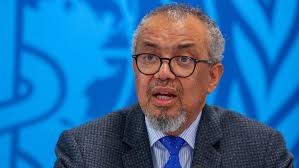
WHO Director-General Tedros Adhanom Ghebreyesus described the outbreak as “extremely serious and difficult” during a virtual briefing on Monday, revealing that more than 900 cases and over 220 deaths have already been reported in the DRC.
According to the WHO, 101 of the reported cases and 10 deaths have been laboratory confirmed. Uganda has also recorded five travel-related infections and one death linked to the outbreak.
“We are facing an extremely serious and difficult outbreak. It will get worse before it gets better,” Tedros said.
“But we know this virus, and we know how to stop it. We have stopped every previous Ebola outbreak, and we will stop this one, too,” he added.
The WHO chief further stressed that the speed of containing the outbreak would determine how many more lives could be lost.
“The question is just how quickly we can do it, and how many more lives will be lost before we do,” Tedros noted.
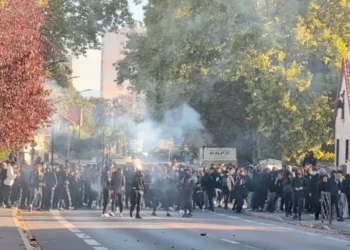
Health authorities are also dealing with growing unrest in parts of northeastern Congo, where communities have clashed with officials enforcing Ebola safety protocols.
At the Mongbwalu General Referral Hospital in Ituri Province, tensions escalated after the body of a prominent religious leader who died from Ebola was held by health authorities for what officials described as a “safe and dignified burial.”
Dr. Richard Lokudi, director of the hospital, said relatives and groups of youth had demanded the immediate release of the body, forcing police and military personnel to intervene.


Lokudi revealed that security officers fired warning shots to disperse protesters gathered around the facility, adding that the tense atmosphere had left medical staff exhausted and under pressure.
Last week, the WHO classified the outbreak as a Public Health Emergency of International Concern, the agency’s second-highest alert level.
Tedros said the outbreak remains a “very high” national risk, while the regional threat level is considered “high.” However, the global risk level remains “low.”
Several countries, including the United States, India, the United Kingdom and Australia, have introduced travel restrictions in response to the outbreak.
The United States has restricted entry for foreign travelers who recently visited the DRC, Uganda and South Sudan. American citizens and nationals returning from the affected countries are being directed through designated airports for health screening and interviews regarding possible exposure.
WHO teams have since been deployed to affected communities to support contact tracing, treatment centres and infection prevention measures. Tedros also announced plans to travel to the DRC on Tuesday as part of efforts to strengthen the response.
The WHO chief explained that delayed detection of the outbreak had complicated containment efforts.
“[It] means that we are now playing catch-up with a very fast-moving epidemic,” he said.
Tedros further noted that insecurity and recent fighting in affected provinces have displaced thousands of residents and fueled distrust toward health authorities.
Another major challenge facing health officials is the absence of approved vaccines or treatments for the Bundibugyo strain of the Ebola virus responsible for the current outbreak.
The WHO has recommended prioritising two monoclonal antibodies for clinical trials while also evaluating the antiviral drug obeldesivir as a possible preventive treatment for high-risk contacts.