






For nearly three decades, the killing of Tupac Shakur remained one of America’s most notorious unsolved cases, generating endless theories over who was responsible for the death of one of hip-hop’s most influential figures.
That long-running mystery has now reached a historic turning point.
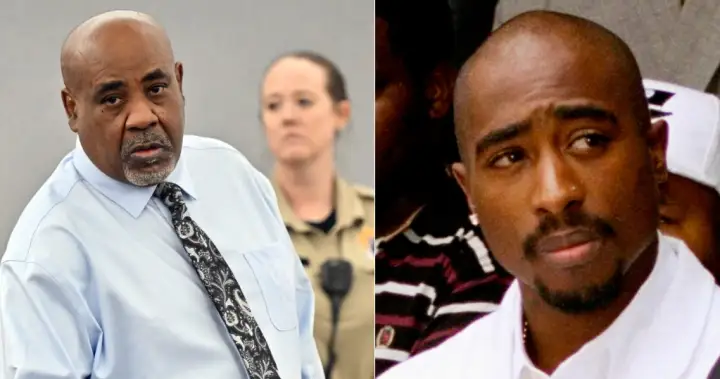
A Nevada jury has found former gang leader Duane “Keffe D” Davis guilty of first-degree murder with a deadly weapon for his role in the 1996 killing of Shakur, making him the first person to be convicted in the case.


The 63-year-old was convicted after jurors deliberated for nearly three hours following an 11-day trial in Clark County, Nevada. Davis, who was a former leader of the South Side Compton Crips in Los Angeles, was accused of organising the drive-by shooting that claimed Shakur’s life.
Prosecutors argued that the shooting was planned as retaliation after Davis’ nephew, Orlando Anderson, was involved in a fight with members of Shakur’s entourage at a Las Vegas casino just hours before the rapper was shot.
According to the prosecution, Davis obtained a firearm, gathered members of his group and set out to confront Shakur.
“Duane Davis, in the culture of gangs, could not let that stand,” prosecutor Binu Palal told jurors during closing arguments. “So what did he do? He acquired a firearm, got his group together and went hunting for Mr Shakur.”
Shakur was in Las Vegas for a heavyweight boxing fight involving Mike Tyson when a white Cadillac pulled alongside the BMW in which he was travelling. Gunfire was directed at the vehicle, hitting the rapper and wounding Death Row Records co-founder Marion “Suge” Knight, who was driving.
Shakur, 25 at the time, died six days later.
For years, the case remained shrouded in uncertainty, with the absence of sufficient evidence preventing a prosecution. The murder became one of the most closely followed cold cases in the United States, fuelling speculation among fans and spawning numerous theories about the circumstances surrounding his death.
The investigation was eventually revived in part because of Davis’ own accounts of the shooting. He had previously spoken about his alleged involvement with law enforcement and the media and later detailed his role in his 2019 autobiography, Compton Street Legend.
Prosecutors used those statements as a central part of their case, while Davis’ defence argued that his accounts were exaggerated or fabricated to promote his book.
Defence lawyer Michael Sanft told the jury that Davis’ statements should not be treated as a confession.
“You’re reading a book that is fiction and not fact,” Sanft said. “But the state wants you to believe that this is somehow a confession, that he was there and present at the time of the shooting.”
Davis pleaded not guilty and has since rejected the allegations against him. He told the judge following the verdict that he intended to appeal.
He is due to be sentenced on October 13 and faces a maximum sentence of life imprisonment without the possibility of parole.
The verdict brings an emotional end to a case that has remained intertwined with the history of hip-hop. Shakur, known for songs including “California Love” and “All Eyez on Me”, was a central figure in the intense rivalry between East Coast and West Coast rap during the 1990s.