






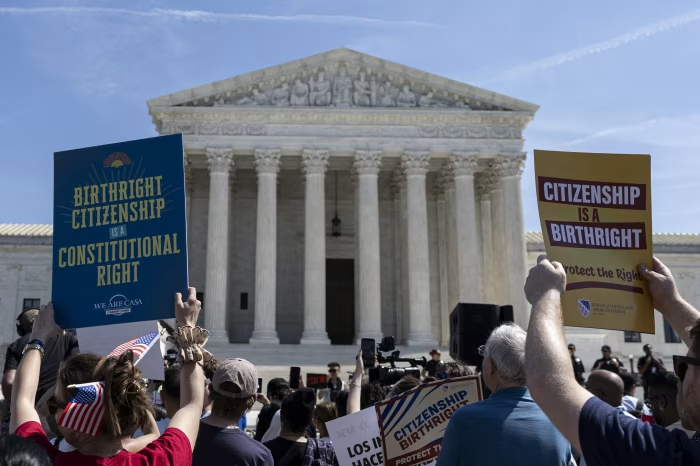
The US Supreme Court has reaffirmed birthright citizenship, ruling that children born on American soil remain entitled to US citizenship under the Constitution, even if their parents are in the country unlawfully or temporarily.
In a 6–3 decision, the court struck down an attempt by President Donald Trump to restrict the long-standing policy through an executive order, marking a significant setback for his immigration agenda.
Chief Justice John Roberts, writing for the majority, said citizenship remains rooted in the Constitution’s 14th Amendment. He stressed that children born in the US “to parents unlawfully or temporarily present” are “citizens at birth.”
He added that citizenship represents “the right to have rights – to freely participate in our political community,” noting that the framers of the amendment extended that promise to “every free-born person in this land.” Roberts concluded: “We keep that promise today.”
The Trump administration had argued that the phrase “subject to the jurisdiction thereof” should exclude children of undocumented migrants and some temporary visitors, claiming they do not qualify for automatic citizenship. The court rejected that interpretation.
Five justices, including Roberts, formed the majority, while three dissented.
Justice Clarence Thomas argued that the amendment was being “repurposed for political projects,” insisting it was originally intended for freed slaves who owed no allegiance to foreign states.
Justice Samuel Alito called the ruling a “serious mistake,” warning it effectively grants citizenship to almost anyone born in the country, including those who enter solely to give birth and later leave.


Justice Neil Gorsuch joined the dissent, raising concerns about the broader legal interpretation of the ruling.
The decision was welcomed by immigration advocates and civil rights groups, who said it reaffirmed a core constitutional principle that has stood since 1868.
House Minority Leader Hakeem Jeffries said the ruling confirmed that “all persons born in the United States are American citizens,” adding: “There is, and shall be, no question.”
Dariely Rodriguez of the Lawyers’ Committee for Civil Rights Under Law said the judgment “solidifies what we have known to be true for over a hundred years,” adding: “Anyone born on American soil, regardless of the legal status of their parents, is born an American citizen. We have endured an incredible test of our collective will as a nation and have prevailed.”
The ruling preserves the interpretation of the 14th Amendment that has underpinned US citizenship law since the post–Civil War era, reinforcing that birth on US soil remains the defining standard for nationality.
Source: BBC