






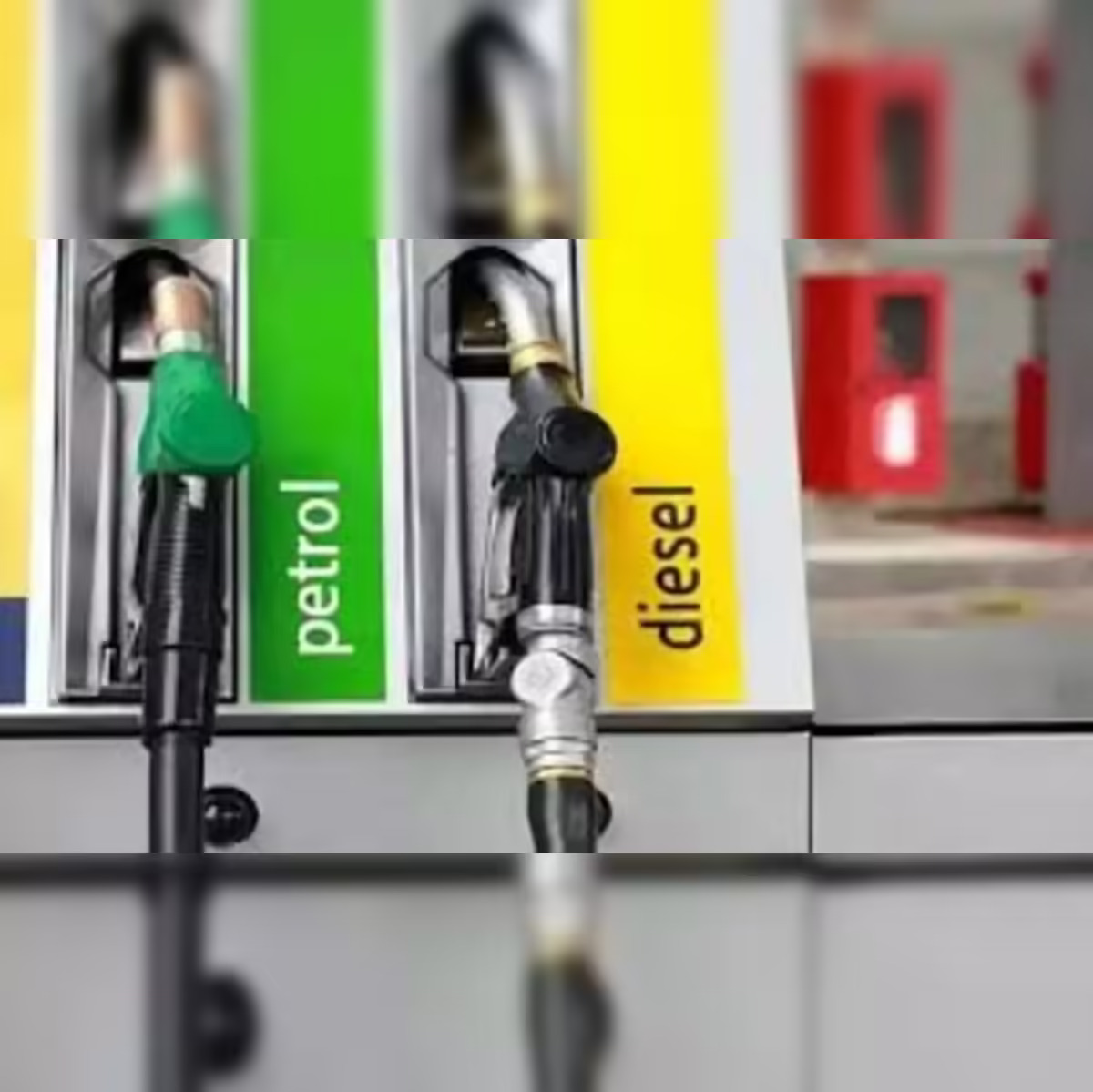
Petrol and diesel prices are expected to increase by 4.24% and 10.23% respectively from Wednesday, September 16, 2026, according to the Chamber of Petroleum Consumers (COPEC).
COPEC projects that petrol will sell at an average retail price of GH¢16.26 per litre in the second pricing window of September, up from the current mean price of GH¢15.60 per litre.
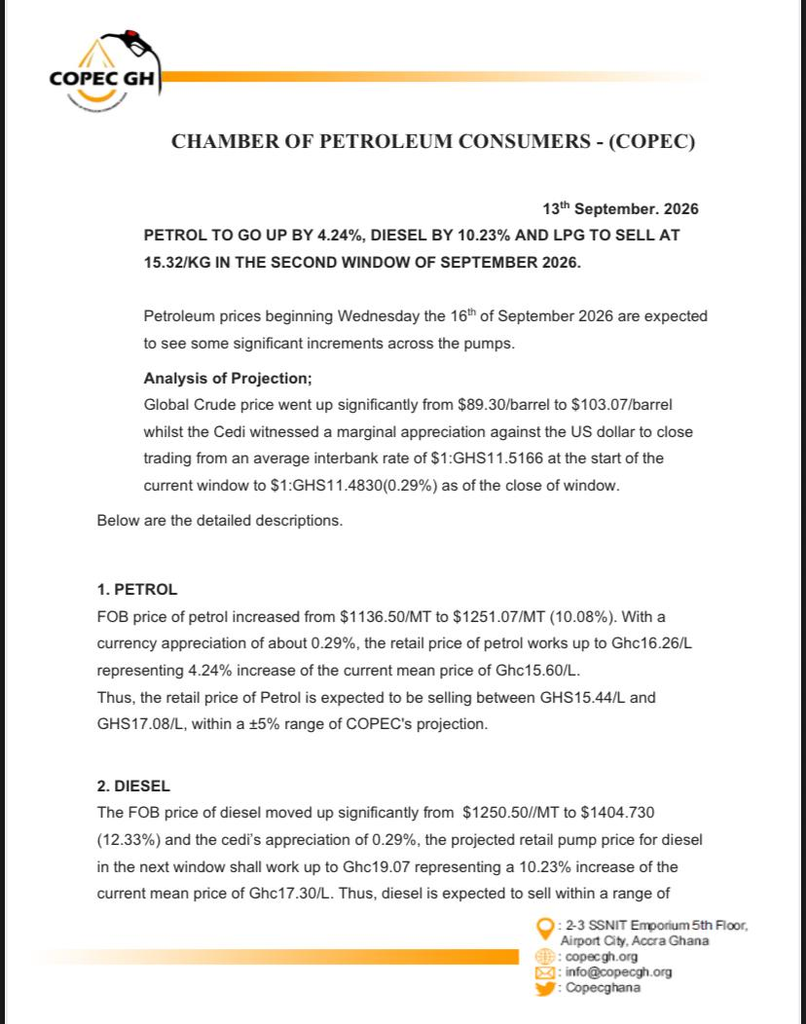
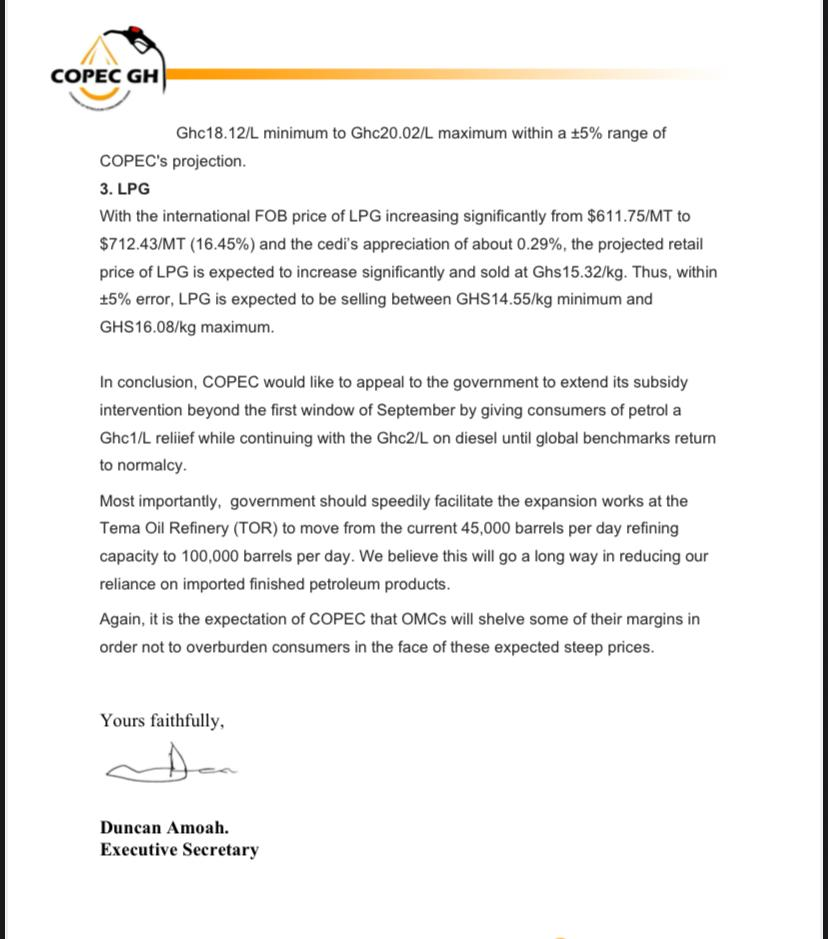
Diesel, meanwhile, is projected to rise to GH¢19.07 per litre from the current average of GH¢17.30, while Liquefied Petroleum Gas (LPG) is expected to sell at GH¢15.32 per kilogram.


The projected increases follow a significant rise in global crude oil prices, which moved from $89.30 to $103.07 per barrel during the pricing window.
COPEC said the Ghana cedi recorded a marginal appreciation against the US dollar, with the average interbank rate moving from GH¢11.5166 to GH¢11.4830 to the dollar, representing a 0.29% appreciation.
For petrol, the international Free on Board (FOB) price increased from $1,136.50 per metric tonne to $1,251.07, representing a 10.08% rise.
With the marginal currency appreciation factored in, COPEC projects petrol to sell within a range of GH¢15.44 and GH¢17.08 per litre, allowing for a ±5% variation around its projection.
The FOB price of diesel also increased significantly, moving from $1,250.50 to $1,404.73 per metric tonne, a 12.33% increase.
COPEC expects diesel to sell between GH¢18.12 and GH¢20.02 per litre within the same ±5% projection range.
For LPG, the international FOB price rose from $611.75 to $712.43 per metric tonne, representing a 16.45% increase.
COPEC projects LPG to sell at GH¢15.32 per kilogram, with an expected range of GH¢14.55 to GH¢16.08 per kilogram.
The petroleum consumers’ group has appealed to the government to extend its subsidy intervention beyond the first pricing window of September.
It is proposing a GH¢1 per litre relief on petrol while maintaining the GH¢2 per litre support on diesel until global benchmarks return to normal levels.
COPEC also urged the government to accelerate expansion works at the Tema Oil Refinery (TOR), with the aim of increasing its refining capacity from the current 45,000 barrels per day to 100,000 barrels per day.
According to COPEC, the expansion would help reduce Ghana’s reliance on imported finished petroleum products.
The group further called on Oil Marketing Companies (OMCs) to consider reducing some of their margins to prevent consumers from bearing the full impact of the projected price increases.
For consumers, the impact could extend beyond the pump, as higher fuel costs are likely to put further pressure on transport fares and household expenses.