






The government’s recent revenue mobilisation interventions, including the use of artificial intelligence (AI) in customs administration and the introduction of tax reforms, have not yet produced significant improvements in revenue collections, the Centre for Policy Scrutiny (CPS) has said.
The policy research organisation said Ghana fell short of its first-half 2026 revenue target by GH¢1.4 billion, raising concerns about the effectiveness of measures introduced to strengthen domestic revenue mobilisation.
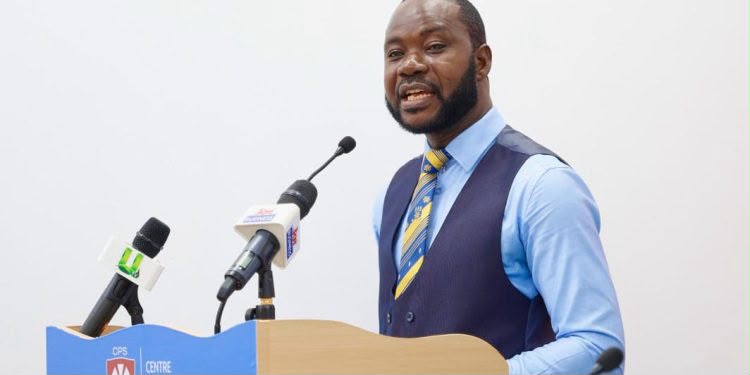
Presenting CPS’s assessment of the 2026 Mid-Year Budget Review on Tuesday, July 28, Executive Director of the Centre, Dr. Adu Owusu Sarkodie, said the revenue shortfall showed that challenges persist despite government’s efforts to improve tax compliance and collection systems.
According to the Centre, total revenue and grants for the first six months of 2026 amounted to GH¢96.1 billion, representing 98.5 per cent of the budget target.
Dr. Sarkodie noted that although the deviation was relatively small in percentage terms, it reflected ongoing weaknesses within Ghana’s revenue mobilisation framework.
“Revenue and grants underperformed by GH¢1.4 billion in the first half of 2026. Although the shortfall was marginal in percentage terms, it points to persistent weaknesses in domestic revenue mobilisation despite the implementation of new compliance measures,” he said.


The CPS assessment identified Value Added Tax (VAT), petroleum receipts, excise duties and import duties among the key revenue streams that failed to meet their respective targets during the period.
The Centre said the underperformance occurred despite the rollout of initiatives aimed at modernising revenue administration, including AI-supported customs operations and the Modified Taxation Scheme.
Dr. Sarkodie explained that the limited impact of these interventions suggested the need for government to reassess its revenue strategy and strengthen implementation mechanisms.
“The implementation of revenue-enhancing measures, including AI-driven customs administration and the Modified Taxation Scheme, has yet to produce significant improvements in revenue performance,” he said.
The think tank argued that while technology and administrative reforms could improve tax collection, their success would depend on stronger enforcement, improved compliance and efforts to expand the country’s tax base.
CPS also linked part of the revenue challenge to weaker-than-expected foreign inflows, particularly project loans. It said only 15.8 per cent of projected foreign project loans for the first half of 2026 had been realised, affecting resources available for capital expenditure.
Dr. Sarkodie called for a balanced fiscal consolidation approach that prioritises revenue generation alongside expenditure management.
“The government has used an expenditure-led fiscal consolidation. There is also the need to embark on revenue-led fiscal consolidation without overburdening the taxpayer,” he said.
The Centre recommended stronger tax administration systems, broader taxpayer coverage and improved compliance measures to build a more sustainable revenue framework.
The assessment forms part of CPS’s wider review of the 2026 Mid-Year Budget Review, which also highlighted concerns about inconsistencies in some fiscal projections and the reliance on reduced spending to meet fiscal targets.